In construction; target opening December 2026
Historic Bethel Baptist Church
What would faith do about the injustice in front of you?
1 / 5
- Place
- Birmingham, Alabama
- Client
- Historic Bethel Baptist Church, Birmingham
- What we did
- Planned ✓Designed ✓Built ✓Runs ✓
- Status
- In construction; target opening December 2026
Built: TimeLooper delivered fabrication and installation, directly or through fabricators we managed.
The place and its story
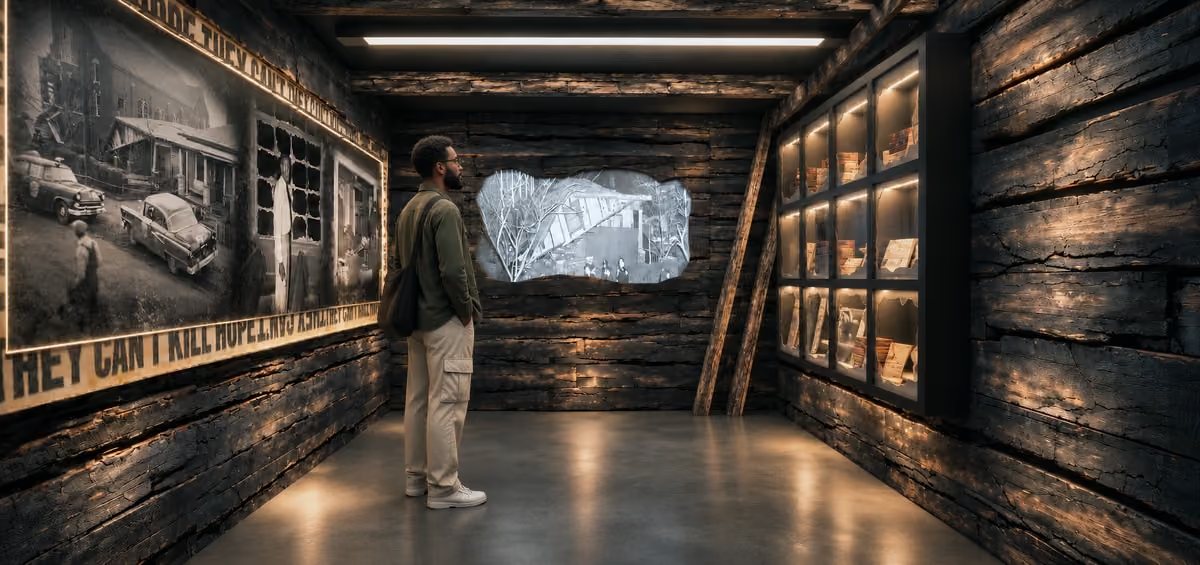
Historic Bethel Baptist Church in Birmingham's Collegeville neighborhood was the headquarters of Rev. Fred L. Shuttlesworth's movement. The church and its parsonage were bombed three times, including on Christmas night in 1956. Today it is a National Historic Landmark, and the new museum is inside the historic church itself.
The challenge
The church wants visitors to understand Shuttlesworth's actions and to leave ready to act for justice in their own communities. The museum has to do this inside a sacred building that must be preserved. It also has to work for a small staff and a stream of civil rights travelers.
What we understood
Most visitors arrive on the civil rights trail, with the movement's famous names already in mind, and step into a working church rather than a museum. This church did not build a museum to close a chapter. Shuttlesworth set out, in its words, to "do right by faith," and the congregation still holds that his work is unfinished. Visitors understand him best when they meet him as a person, in his own church and in his own voice, and then are asked what that faith would do about the injustices in front of them today.
The idea
Where faith became public action.
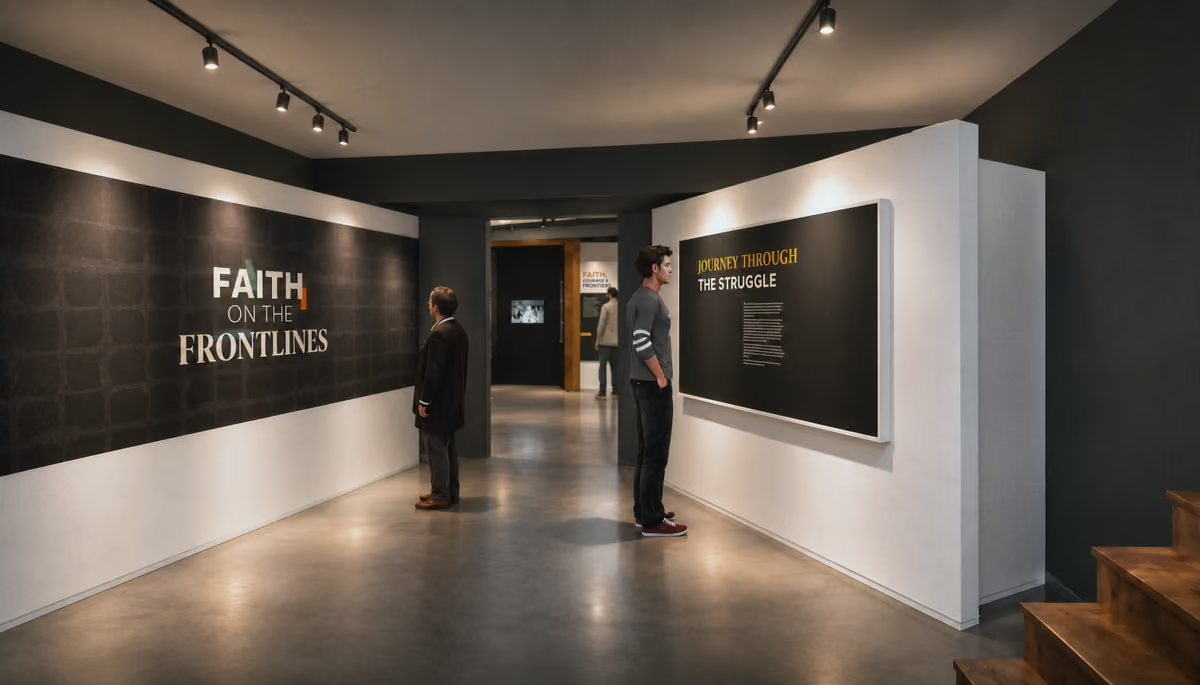
So the journey begins in the original pews, with Shuttlesworth speaking from the pulpit. Downstairs, small rooms bring visitors face to face with the people and choices behind the movement. The visit ends by asking what visitors will carry into their own communities.
Inside the experience
Meet
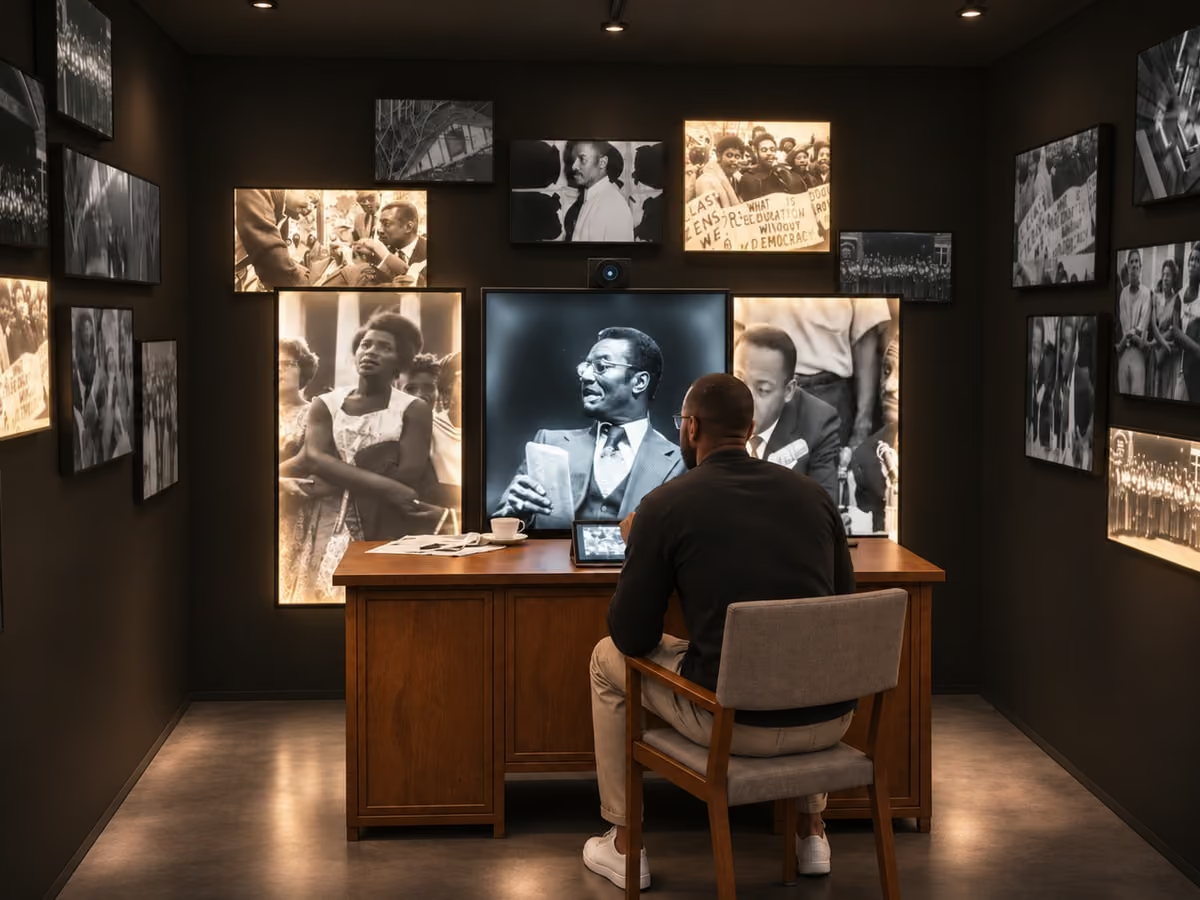
A conversation with the Reverend
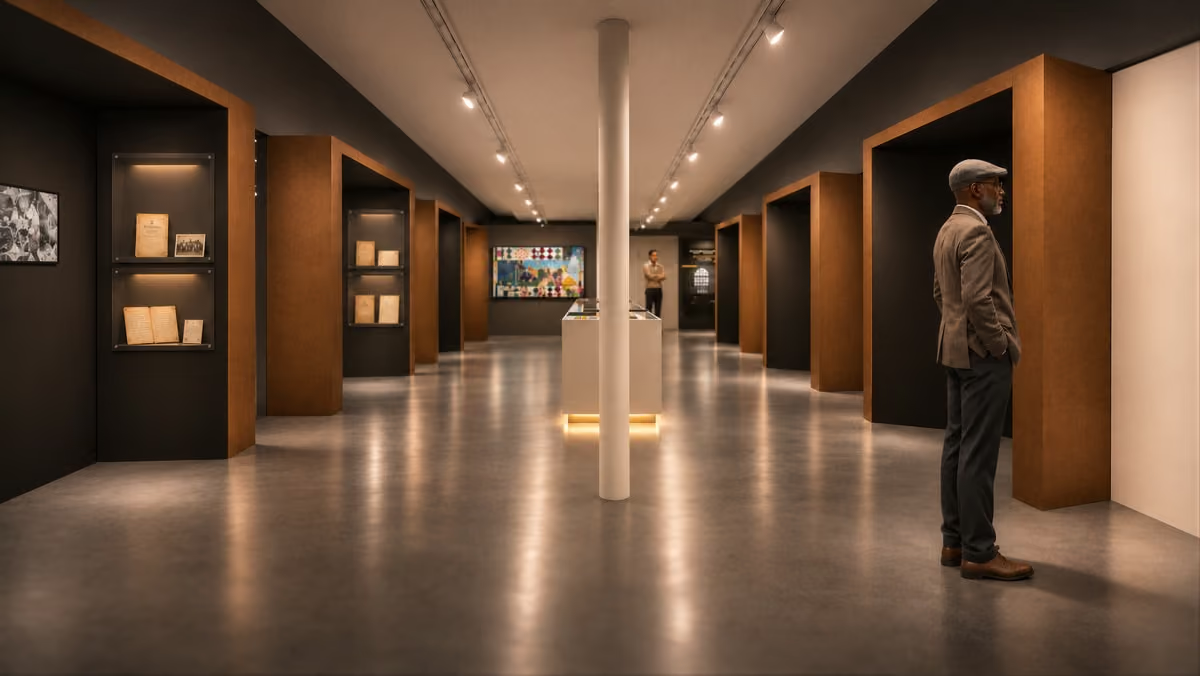
In a small room set as his study, visitors choose a question or ask their own, and Shuttlesworth answers. As he speaks, framed screens and real letters and flyers on the walls light up to show what he describes.
Activate
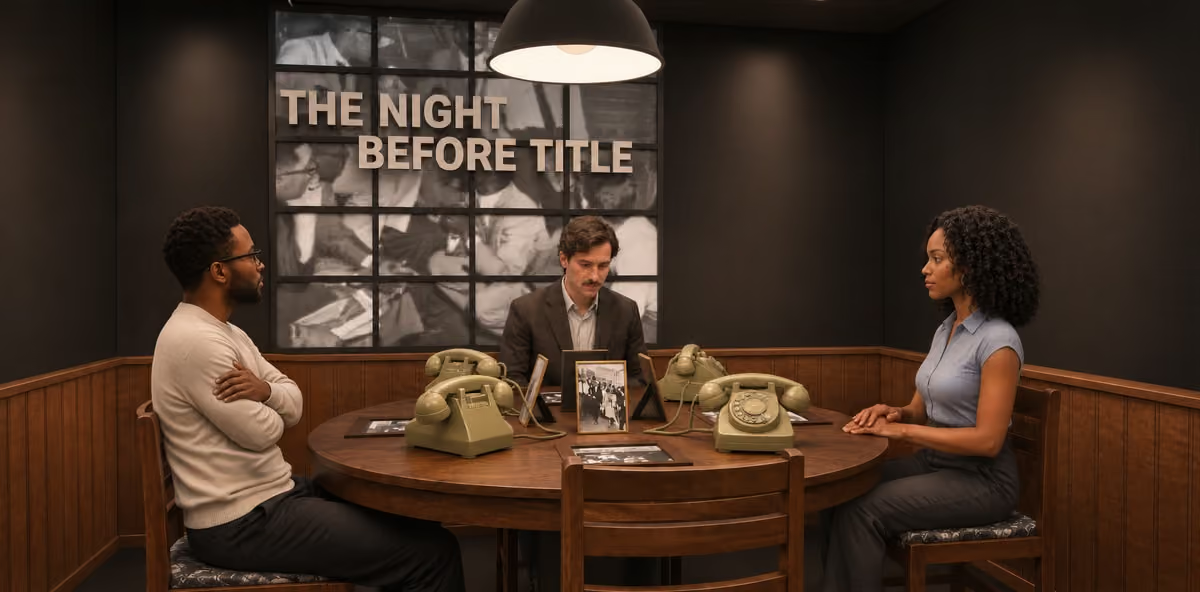
One night in Birmingham
Visitors take a seat at the round table on the night before a march and pick up a rotary telephone. A foot soldier is on the line, telling their own story and trying to persuade the visitor to join them. The telephone is the way in because it is how the movement’s networks organized in the 1960s.
Threads of Unity
Before leaving, visitors build a digital quilt patch from symbols of the civil rights movement. Quilting carries memory and story in the African American community, and each patch joins the church’s digital quilt, which grows with every visitor.
Watch
Echoes of Bethel
Visitors sit in the sanctuary's original pews as Shuttlesworth tells his story from the pulpit, including the night his home was bombed. Screens around the room show the congregation's faces, the streets and his own handwritten words. Removable screens keep the sanctuary itself unaltered.
Inside the parsonage
Visitors step inside the parsonage and experience the Christmas night in 1956 when it was bombed.
The takeaway
Visitors leave with the movement handed to them. Civil rights is not a chapter that closed. The struggle for full equality under the law continues, and it belongs to everyone, arm in arm, not to one community. The church offers what Shuttlesworth relied on, faith, as something to carry into it.
More places like this
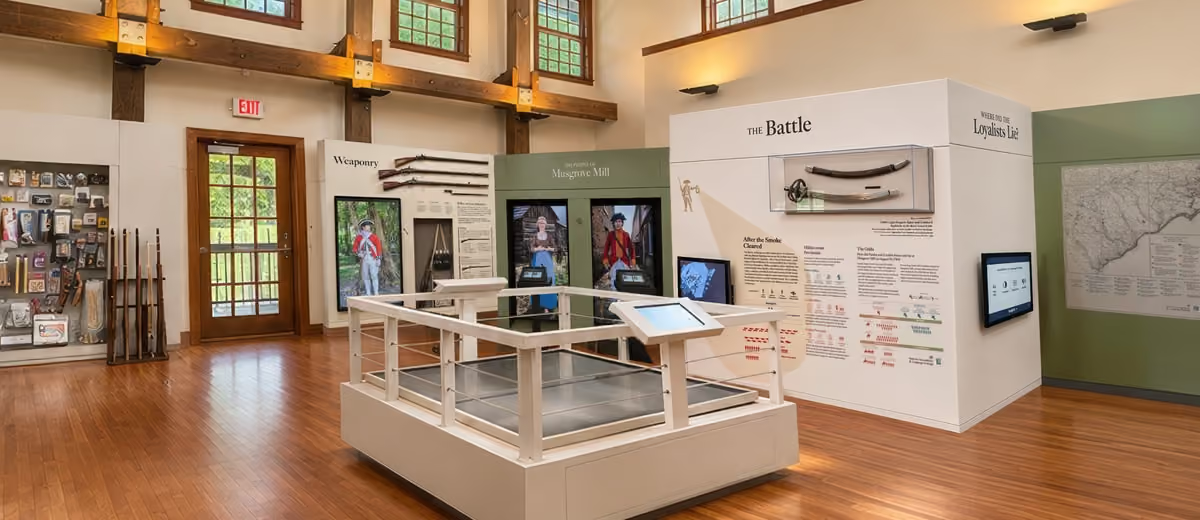
Musgrove Mill State Historic Site Visitor Center
Open since August 2026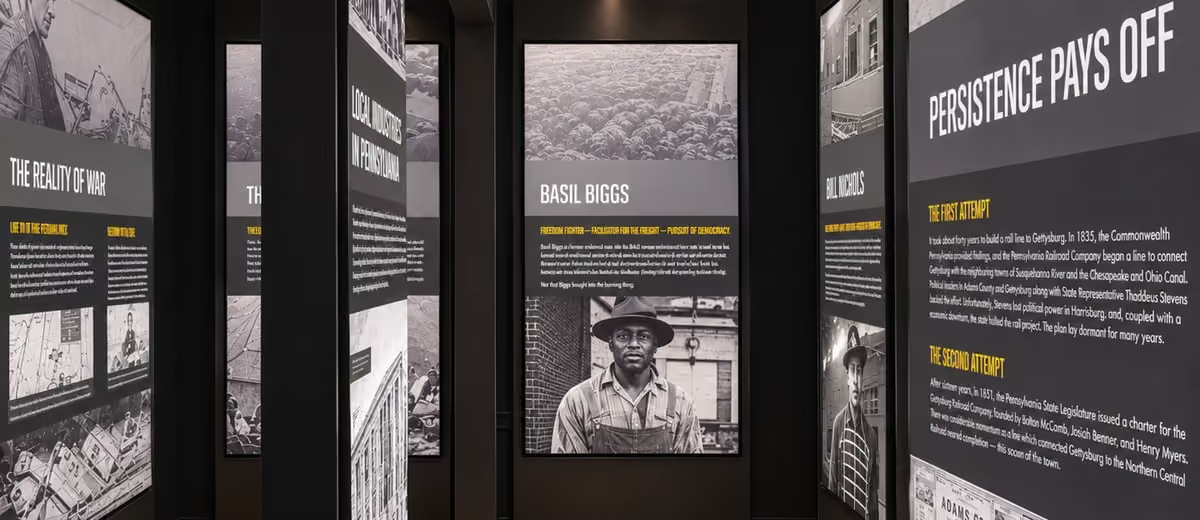
Gettysburg National Military Park
Opened April 2022 at the Lincoln Railroad Station; in the Gettysburg National Military Park Museum & Visitor Center since 2024