Carolina Rising


1 / 16
- Place
- Gaffney, South Carolina
- Client
- City of Gaffney, South Carolina
- What we did
- Planned ✓Designed ✓Built ✓Runs ✓
- Status
- Open since April 2026
Built: TimeLooper delivered fabrication and installation, directly or through fabricators we managed.
The place and its story
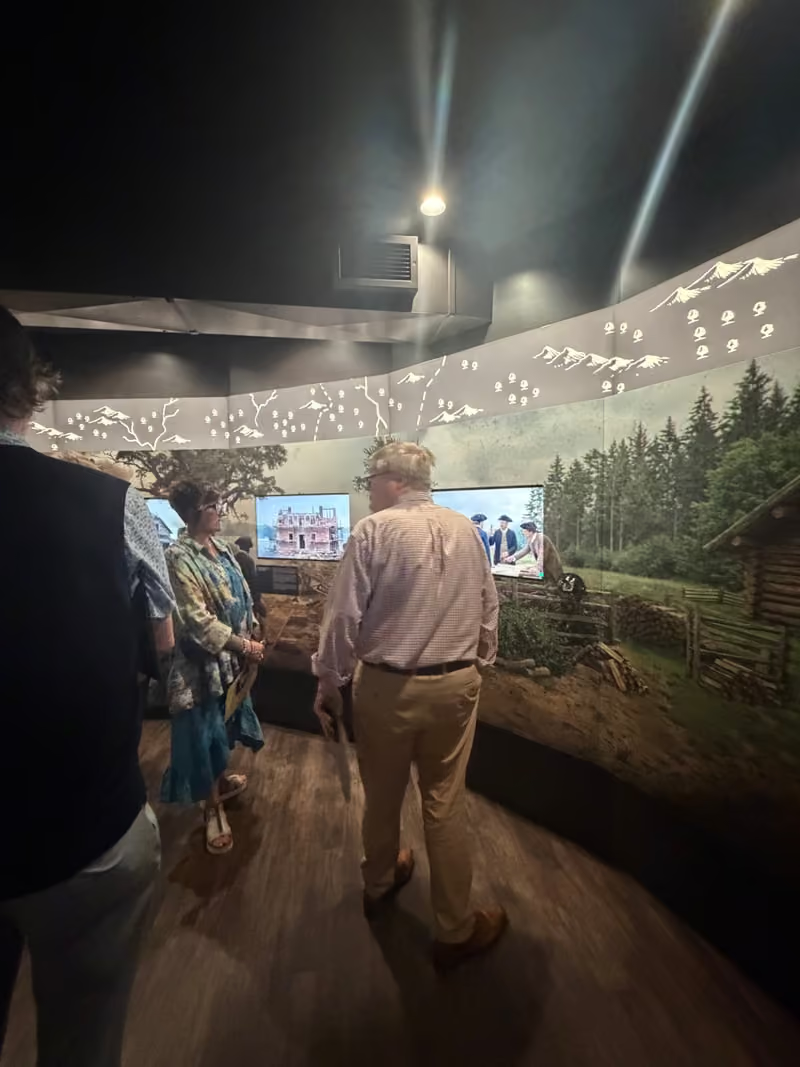
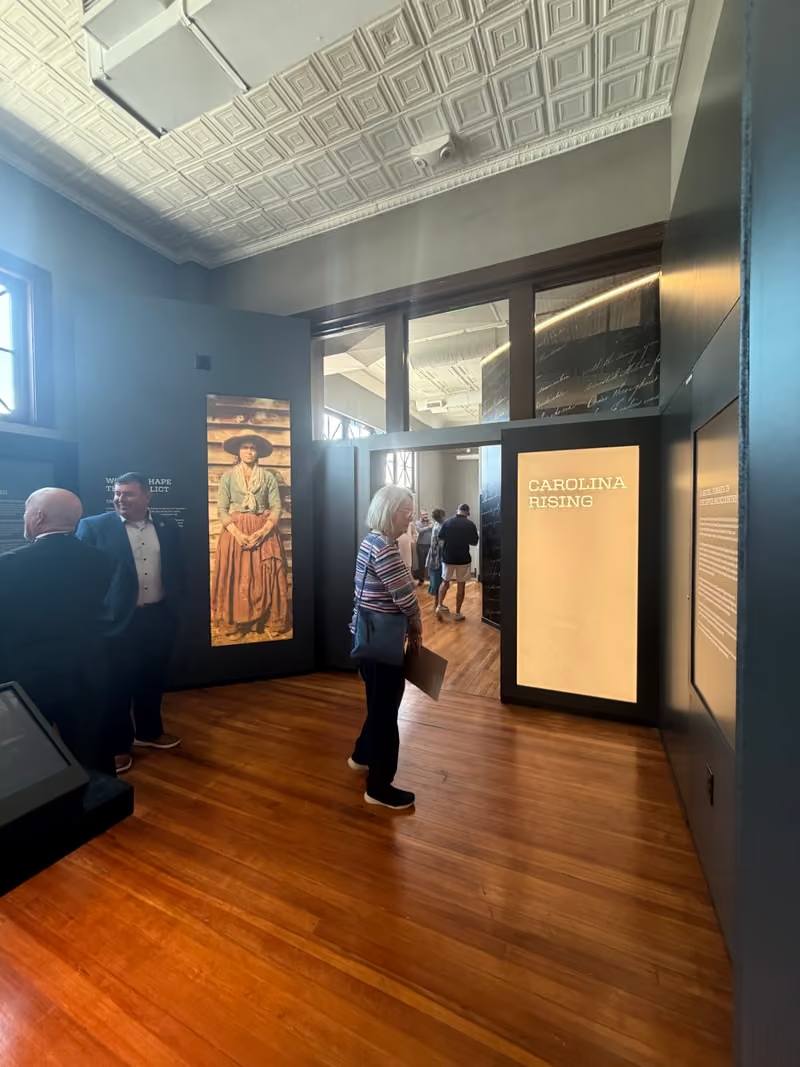
Carolina Rising is a new museum in downtown Gaffney, South Carolina, created with the City of Gaffney. It tells the story of Cherokee County during the American Revolution. In 1780 and 1781, the battles of Kings Mountain and Cowpens were fought largely by local militia. Neighbors fought neighbors, and families split apart.
The challenge
Revolutionary War travelers visit Kings Mountain and Cowpens, then drive past downtown Gaffney. The city wanted a destination that would bring them in and keep them longer. It also wanted visitors to see how ordinary local people shaped the war, not only armies and generals. Most visitors arrive sure that they would have been Patriots.
What we understood
Most visitors arrive sure they would have been Patriots. In the backcountry, for most people, it was not about ideals. It was about protecting your family, your property and your livelihood, and that led to very hard choices, often made more than once, as people changed sides with the way the war was going. Telling visitors this is not enough. They need to feel that uncertainty for themselves.
The idea
It wasn't an easy choice.
So the museum never hands visitors a hero. They meet the people of Cherokee County and hear their reasons, fears and loyalties in their own words. The galleries move from curiosity to unease, then to the conflict of the war years and the cost of Kings Mountain. Along the way the museum adapts to each visitor. At the end it asks a personal question: where would you have stood?
Inside the experience
Meet
A debate you judge
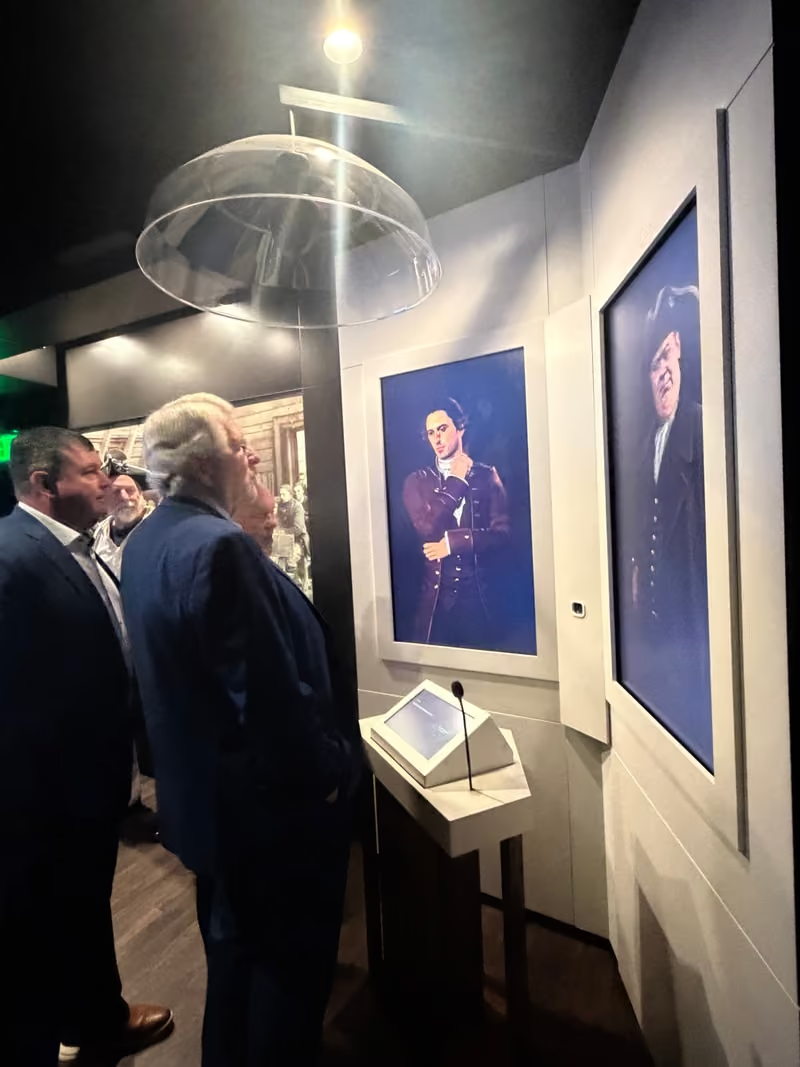
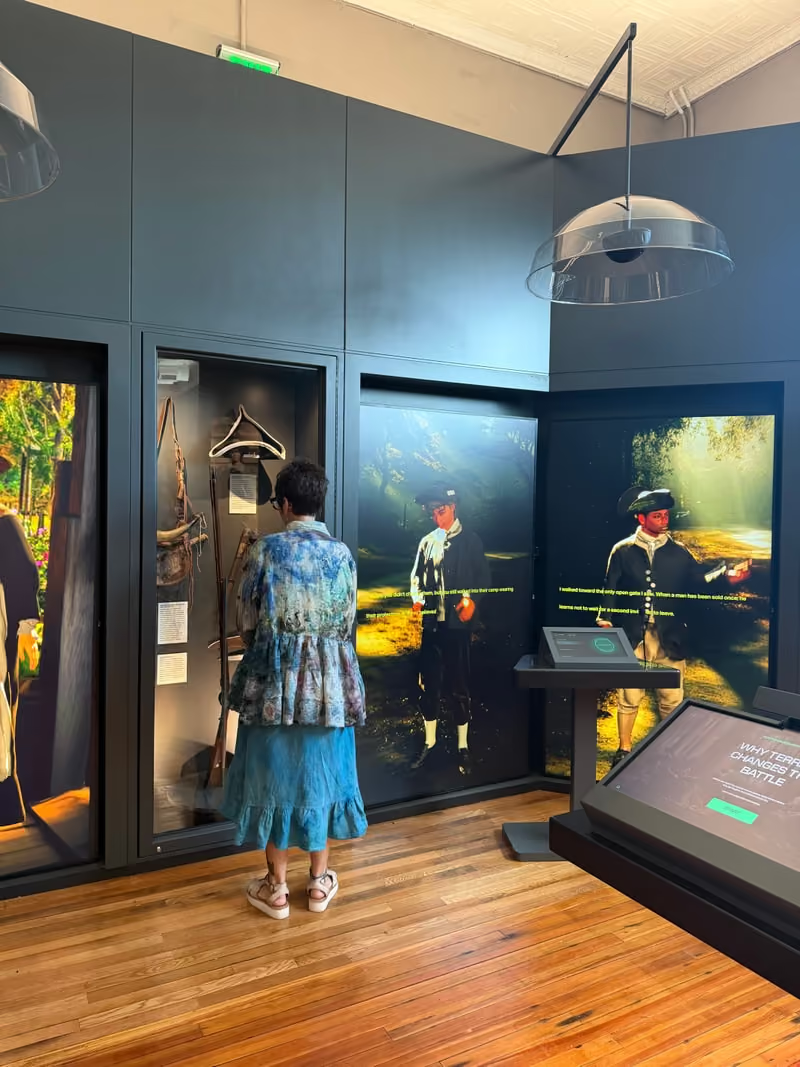
In the first gallery, two men argue face to face in 1775: Thomas Fletchall, a Loyalist, and William Drayton, a Patriot. Visitors choose the questions, from independence to the risks for backcountry farms. They listen to both sides, then decide who made the stronger case. The museum never declares a winner.
Neighbors who won't say which side they're on
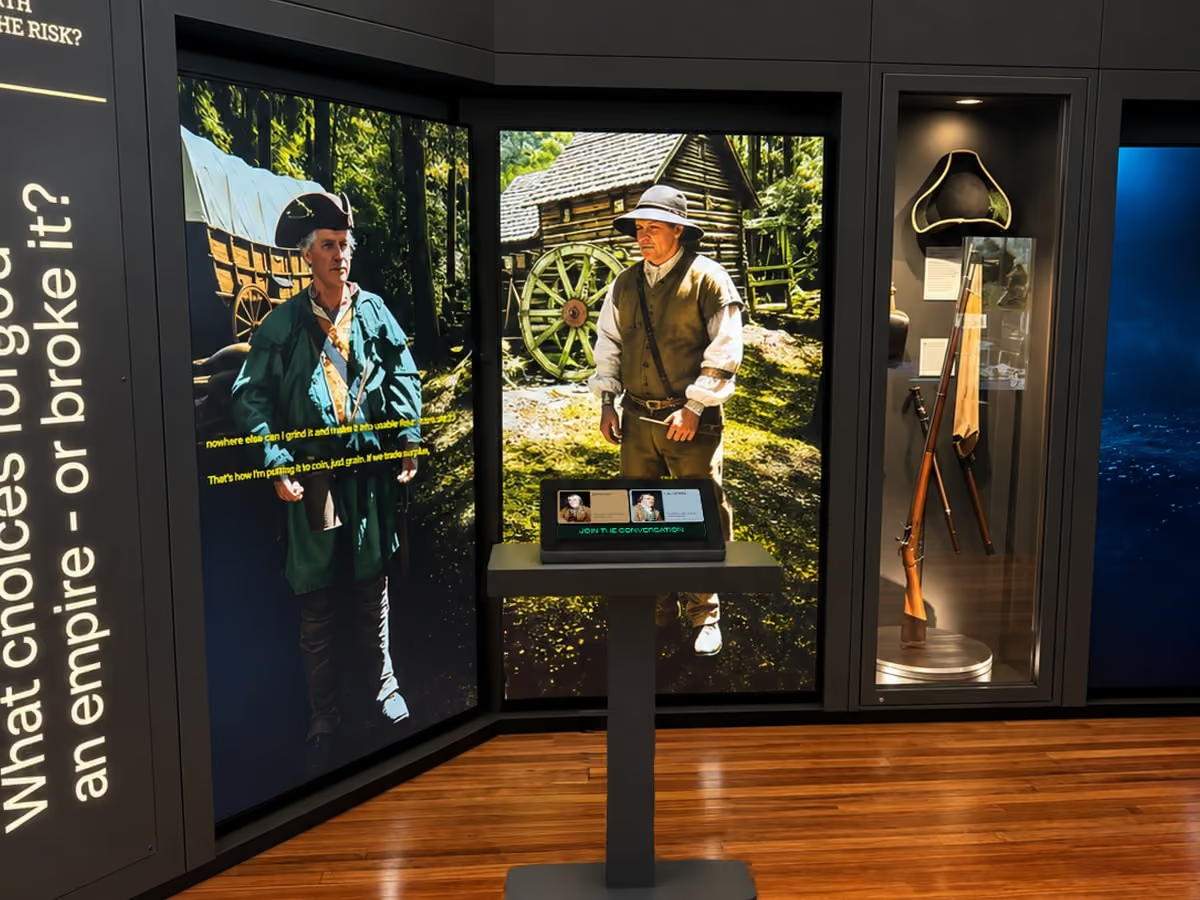
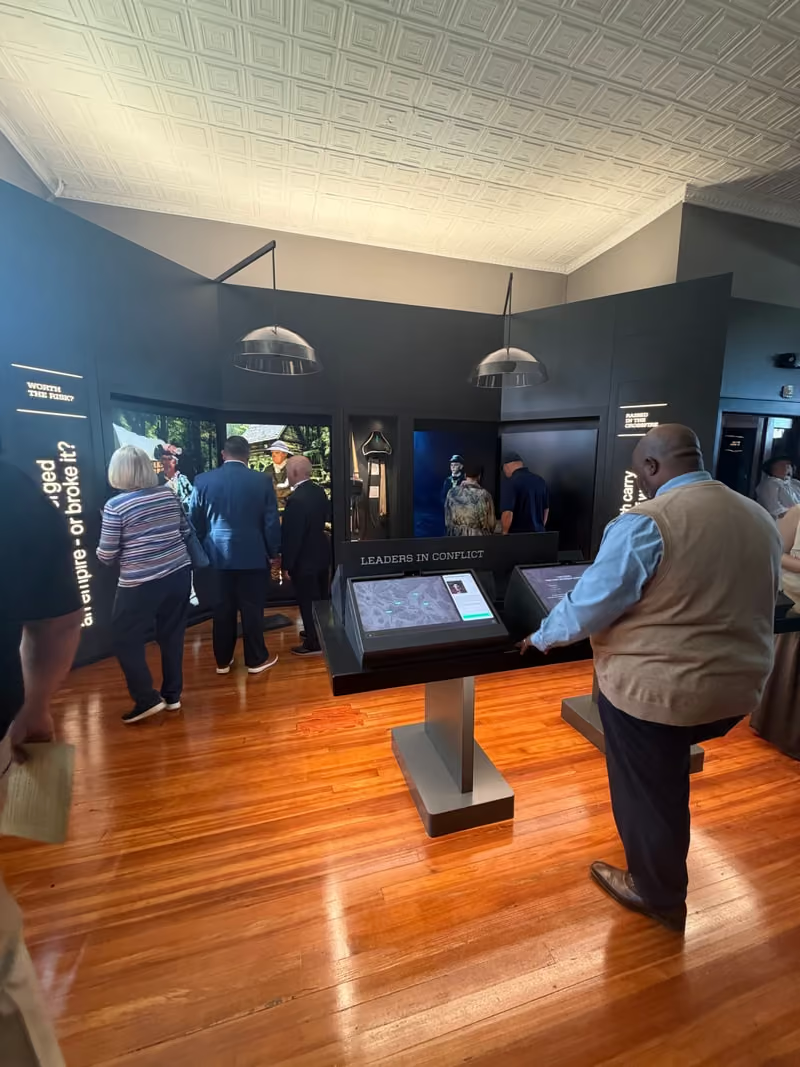
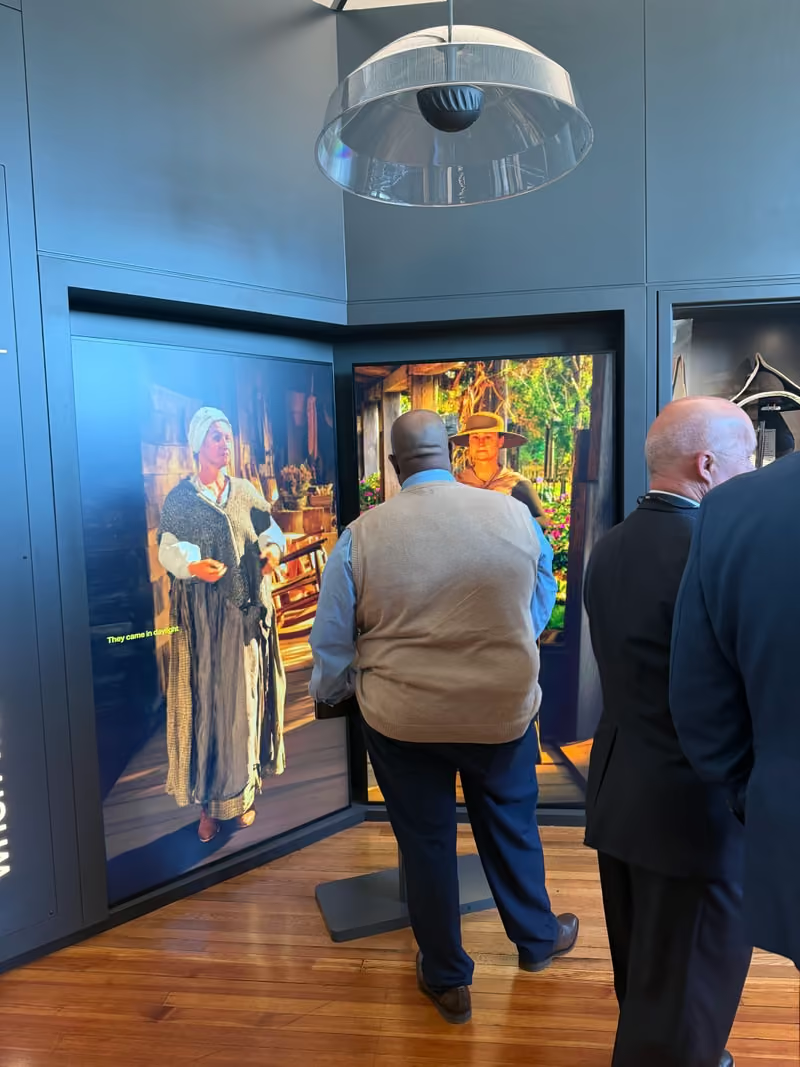
The second gallery is filled with life-size figures of real local people, standing in pairs. There are two men of business, two doctors and two young men raised in the crossfire. Two women hold their homes, and two Black men speak of a war about liberty itself. None of them announces a side. Visitors ask about their families, fears and choices, and loyalties come out slowly.
Activate
Orders with half the picture
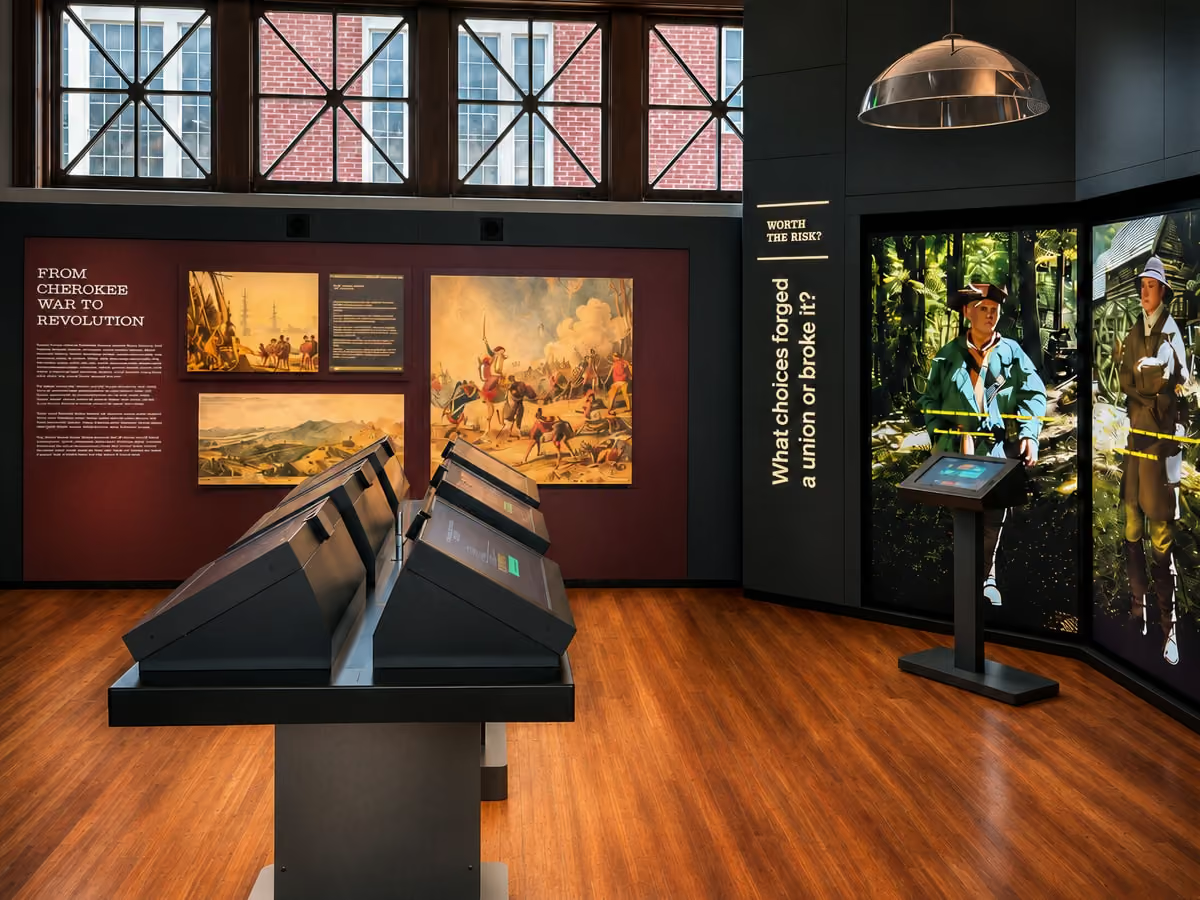
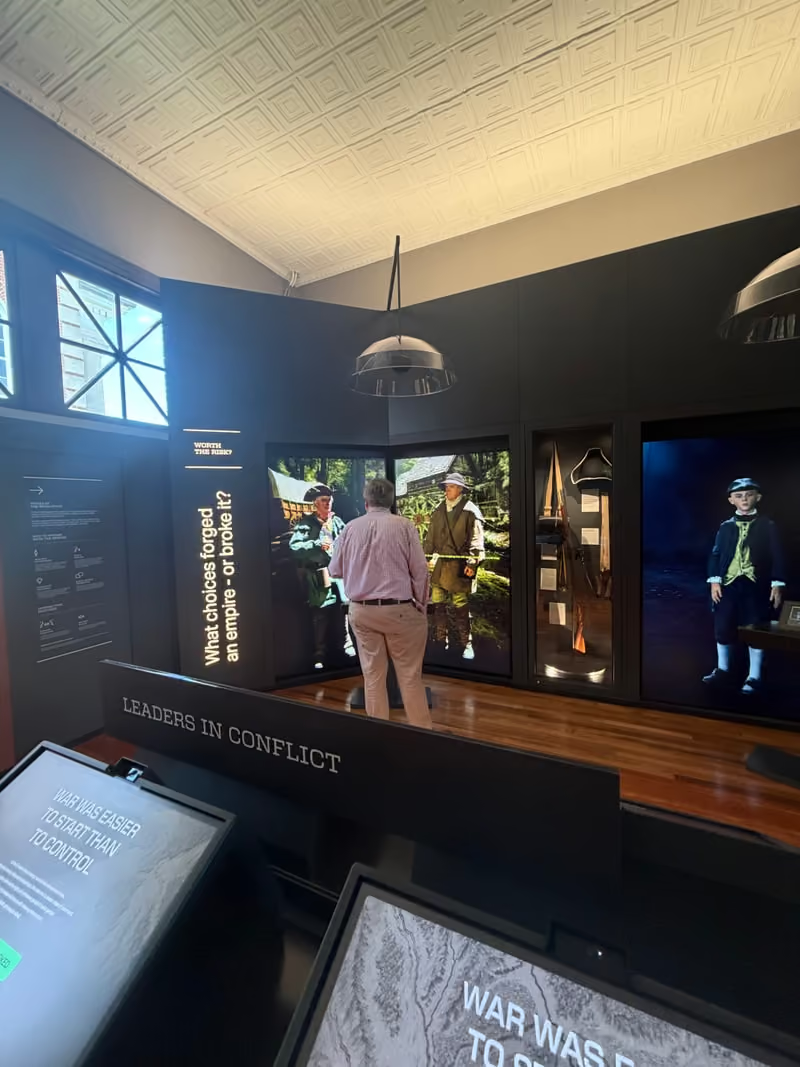
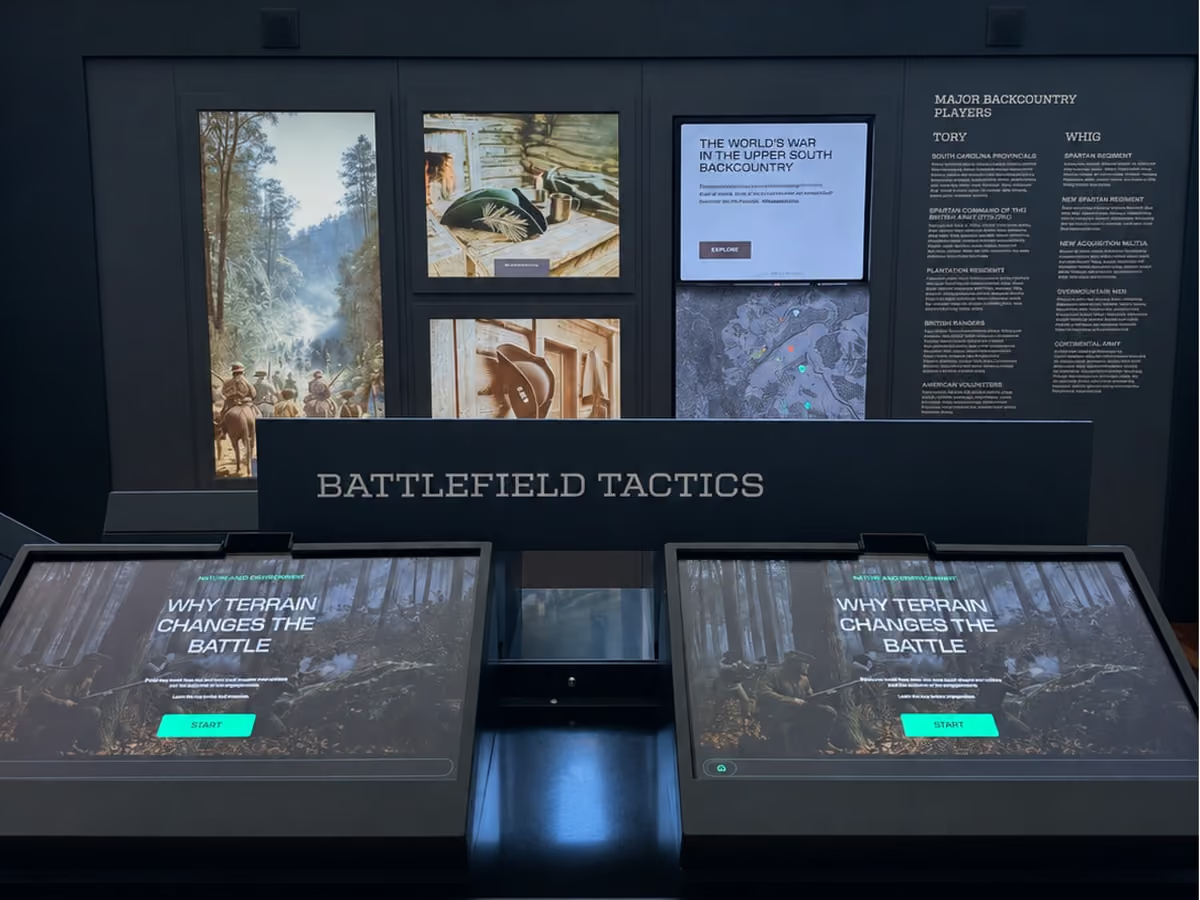
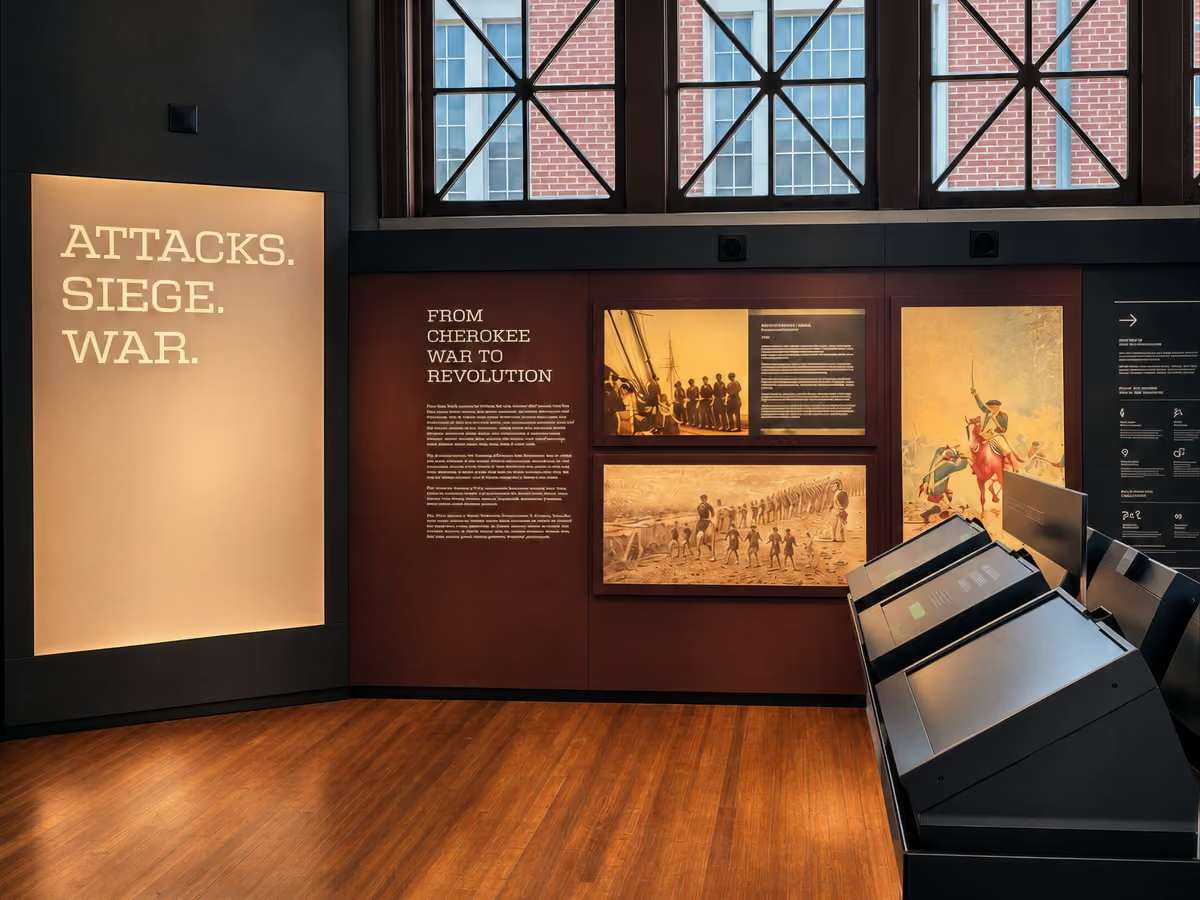
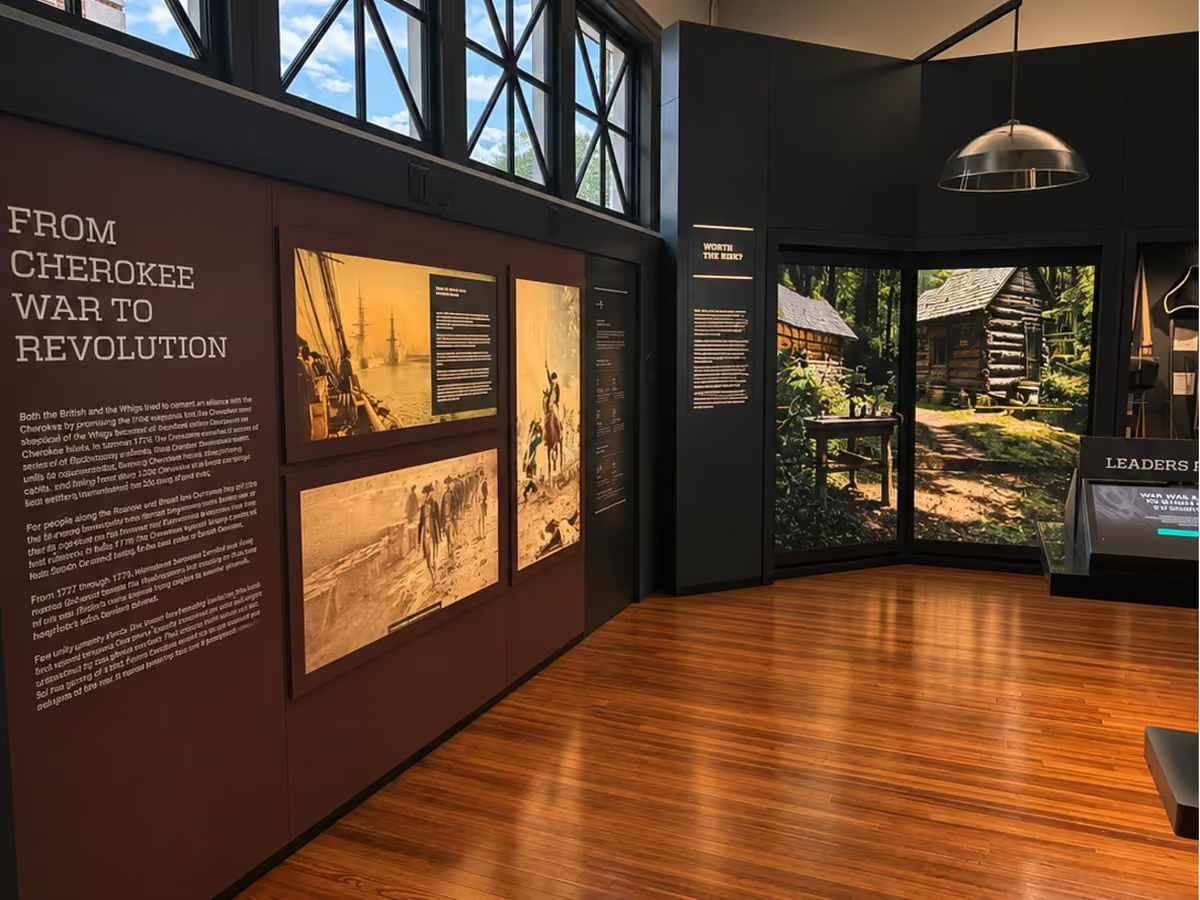
At the Leaders in Conflict table, visitors step into the decisions of 1780. At each step they see what a commander knew, what he assumed and what he could not know. Then they choose. They see how an order given far away could land on a neighbor's farm.
Where would you have stood?
At the end, the museum asks them to weigh everything they have seen: in 1780, would they have been a Patriot or a Loyalist?
Watch
Lives on the frontier
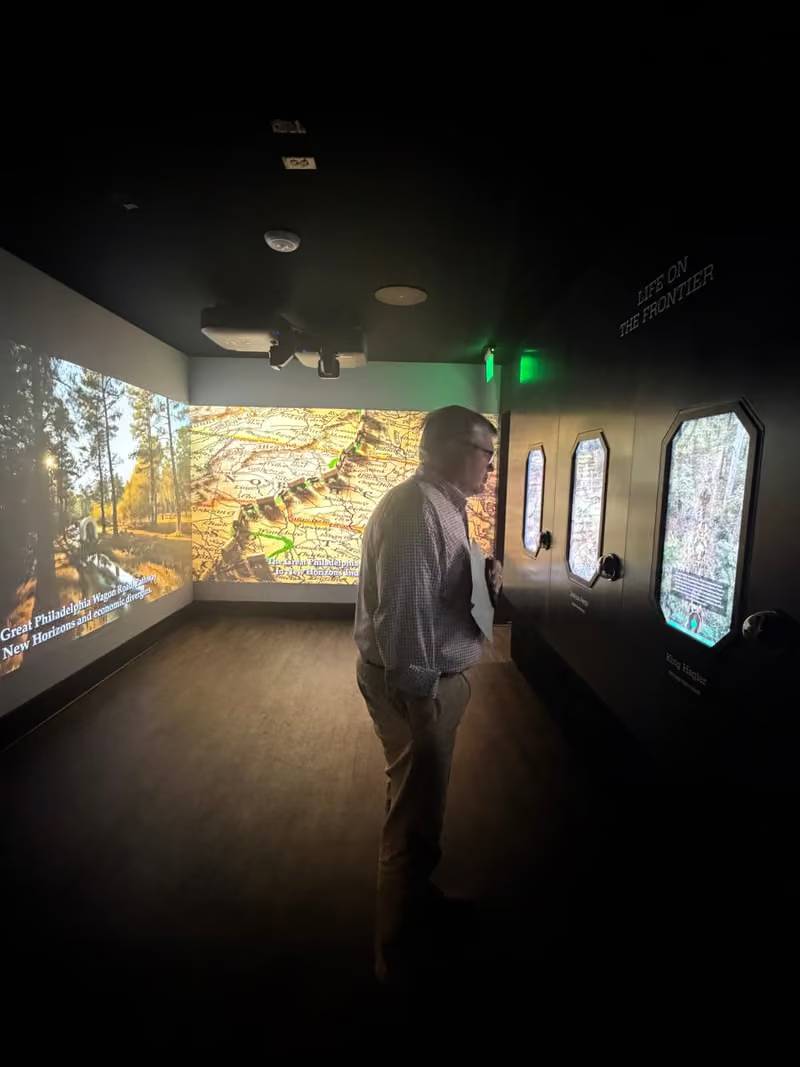
In story pods, visitors follow individual lives into the backcountry. One follows the Nuckolls family down the Great Wagon Road. Another tells the story of Agathy, an enslaved woman who held the Nuckolls homestead together as the war closed in. Another follows King Hagler, leader of the Catawba Nation. The war reaches their lives before it reaches the galleries.
A film of frozen moments
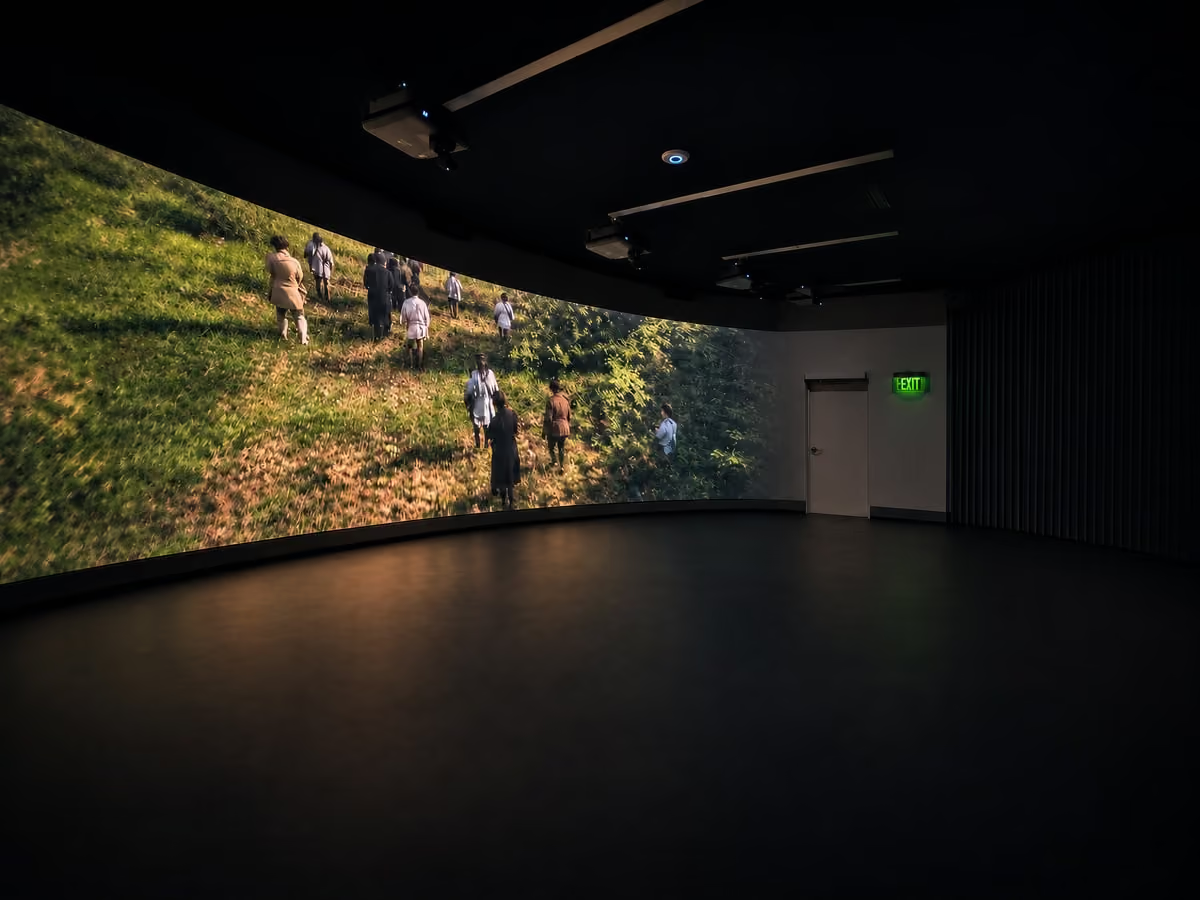
In the theater, the camera moves through moments frozen in time, from the fall of Charles Town to Kings Mountain and Cowpens. It follows local people rather than generals. Among them are a fifteen-year-old militiaman, a girl who lost her brother and father, and a young Loyalist whose choice cost him his life.
Adapts to you
The museum remembers you
At the start, visitors choose their age group and accessibility needs. The museum then recognizes them across the galleries with a temporary ID and stores no personal information. Explanations adjust to their age, and characters respond to what they have already explored.
The takeaway
Visitors leave appreciating how complicated real decisions are. We look back as the victors and sort people into good and bad, but the choices in front of them were rarely black or white.
Since opening
Within months of opening, the museum learned that visitors wanted to go deeper than the first design assumed. Several interactives now carry additional content layers in response. The figures have also had their knowledge base extended, filling gaps in the original material and refining answers around the questions visitors actually ask.
“brought to life in real-time through localized, authentic artificial intelligence that uses primary source documents”
More places like this
National Liberty Museum
Open since March 2026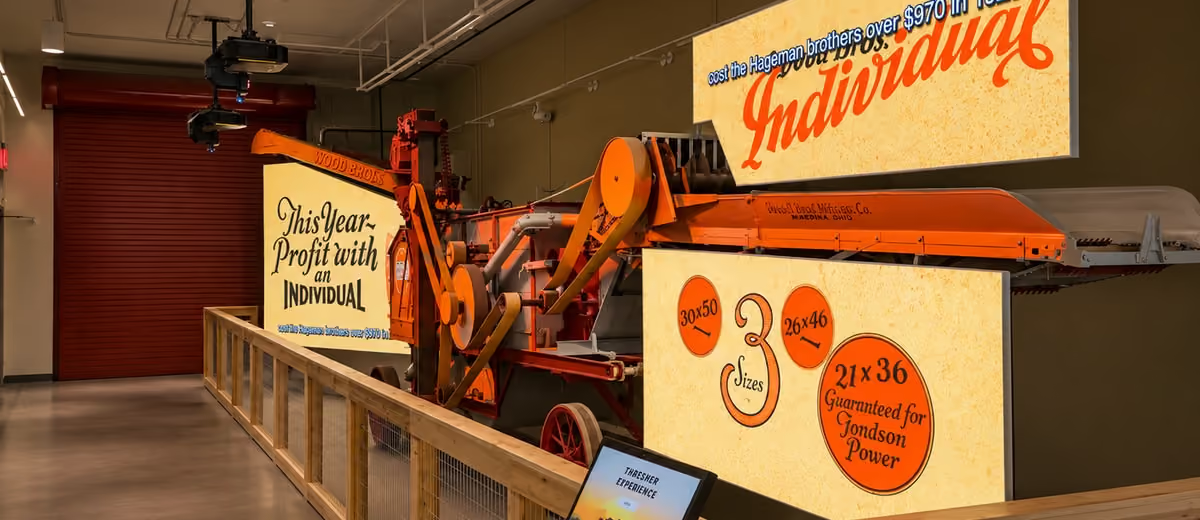
Thresher Hall, Naper Settlement
Open since December 2025