Columbia Air Center at College Park Aviation Museum
Who taught you that you could fly?
1 / 4
- Place
- College Park, Maryland
- Client
- Prince George's County Parks and Recreation (M-NCPPC)
- What we did
- Planned ✓Designed ✓Built ✓Runs ✓
- Status
- Open since October 2025
Built: TimeLooper delivered fabrication and installation, directly or through fabricators we managed.
The place and its story
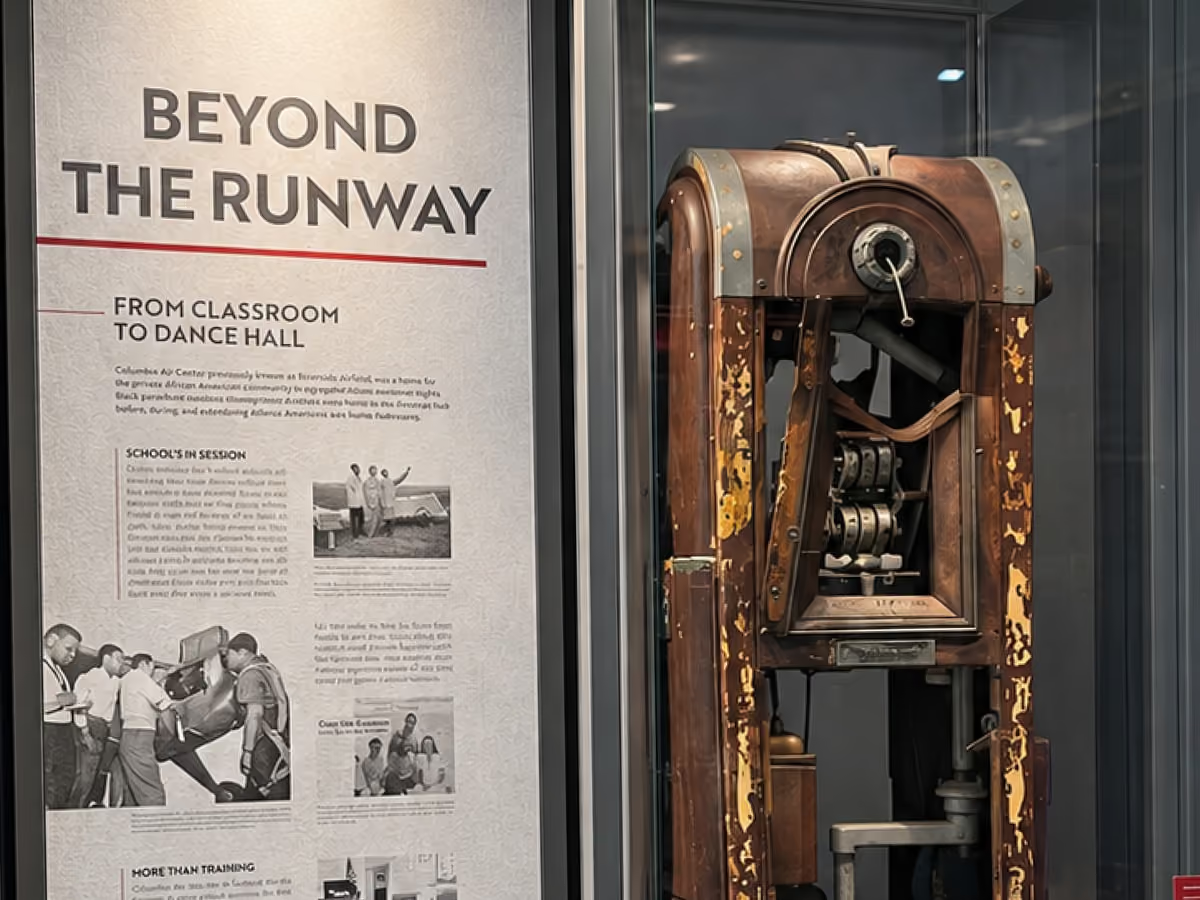
Columbia Air Center: Determined to Fly is an exhibition at the College Park Aviation Museum in Maryland. It was created with Prince George's County Parks and Recreation. It tells the story of an airfield run by African American pilots from 1944 until 1962.
The challenge
It was the first time the airfield's story had been told in a museum. Much of it survived only because its own community kept it, in John Greene's scrapbooks and family collections. The museum wanted every section to teach something specific, in plain language young visitors could read, and to connect the history to belonging today.
What we understood
The children who visit from Prince George's County arrive never having heard of the airfield, and most will see themselves in its pilots. They have also learned to expect that any Black history they meet in a museum will be a story about struggle. This one is not, or not only. These were people who loved to fly and happened to be Black, and when white-run airports showed them the gate they built their own field and taught the next generation on it. The exhibition exists to let a child stand in front of that and conclude the obvious thing: that they can dream as big.
The idea
An airfield where a community made room to belong.
So the exhibition is built around people: the pilots, students and families who made the field and passed on what they learned. Visitors meet them in their own words, see what they kept, and are asked to trace how far their example reached.
Inside the experience
Meet
In their own words
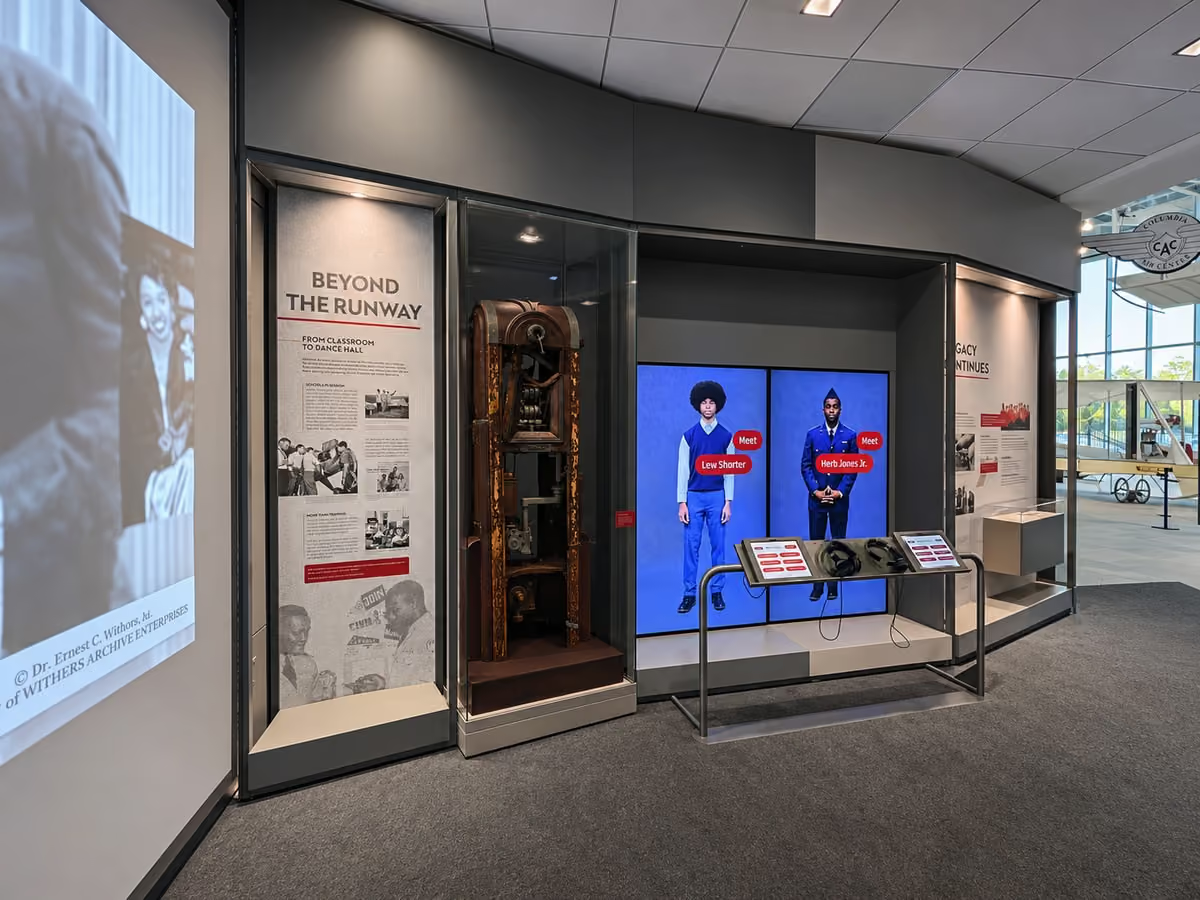
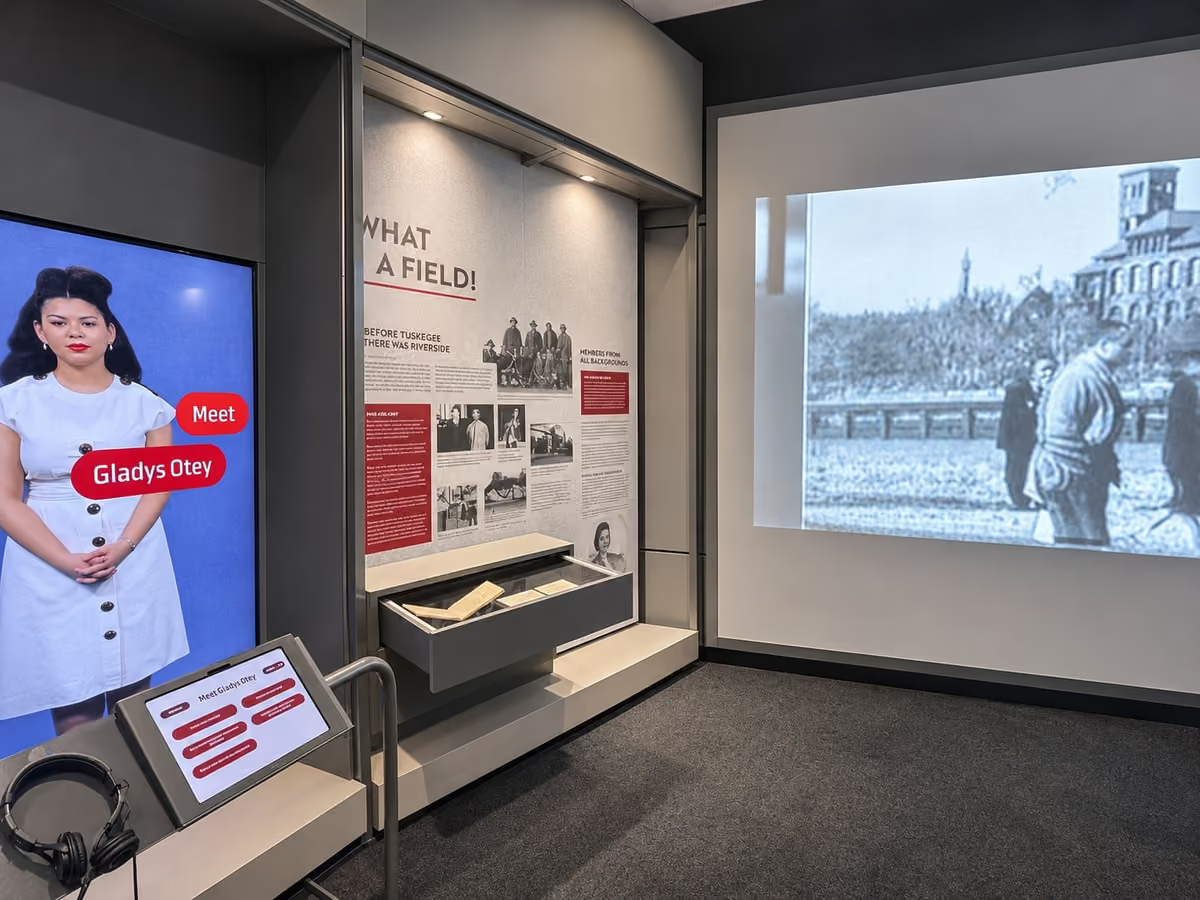
At question stations, visitors choose what to ask John Greene, Gladys Otey and Herbert Jones Jr. What was a typical day like at the field? Where did everyone go after it closed? The answers come back as first-person accounts drawn from their lives.
Activate
What a field!
The story of the Cloud Club, pushed out of other airports, leads to the field they found themselves. Drawers hold reproductions of the airfield's first license and Gladys Otey's solo shirt. A page of Greene's own account of building and running an airport gives the section its name.
A wall of names
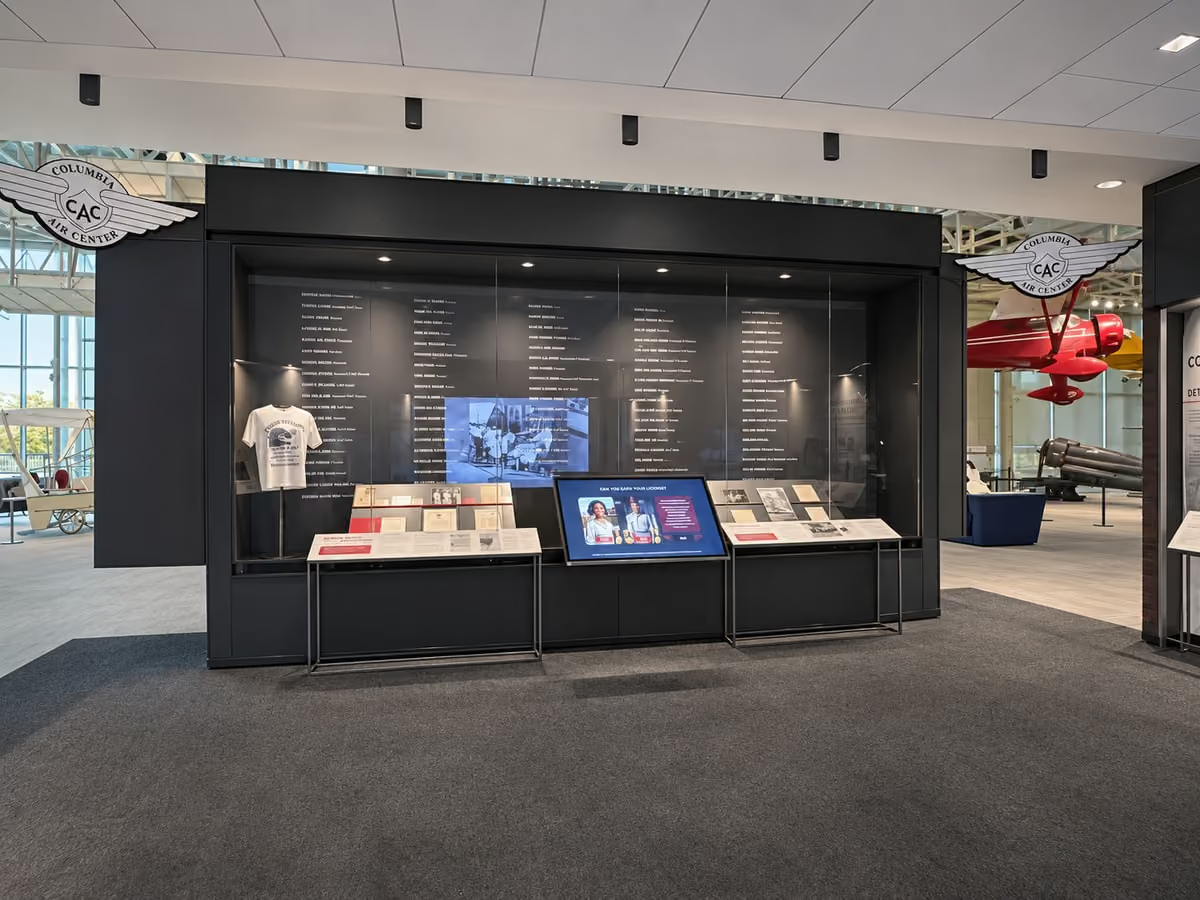
Behind the artifacts, the names of people who flew at Columbia Air Center fill the wall in plain columns. The airfield stops being one man's story and becomes a community.
Calculate the reach
The legacy section centers on a photograph of Black aviators at a gala in the 1980s, including John Greene and Herbert Jones. It asks visitors to count the lives these teachers changed, then the lives their students changed. Then it asks how many lives they might change themselves.
More places like this
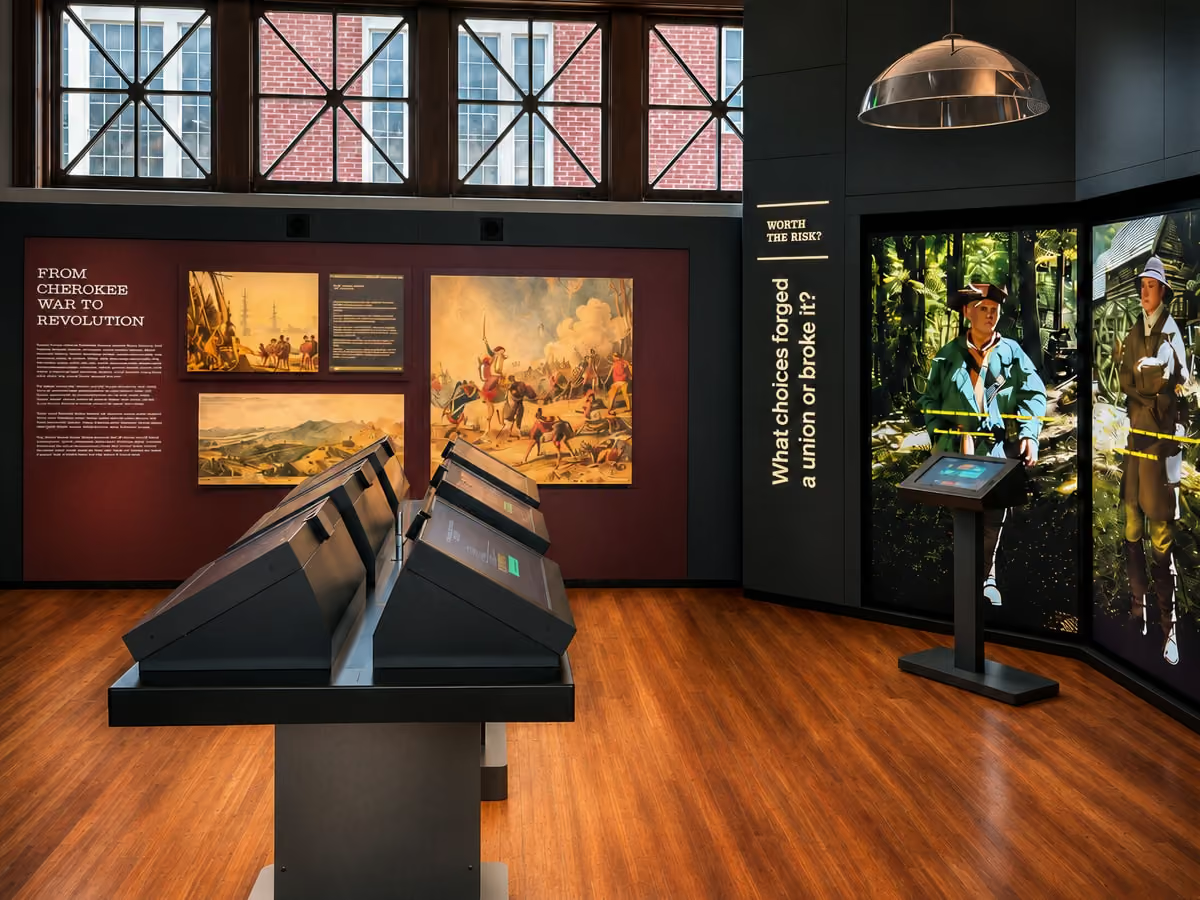
Carolina Rising
Open since April 2026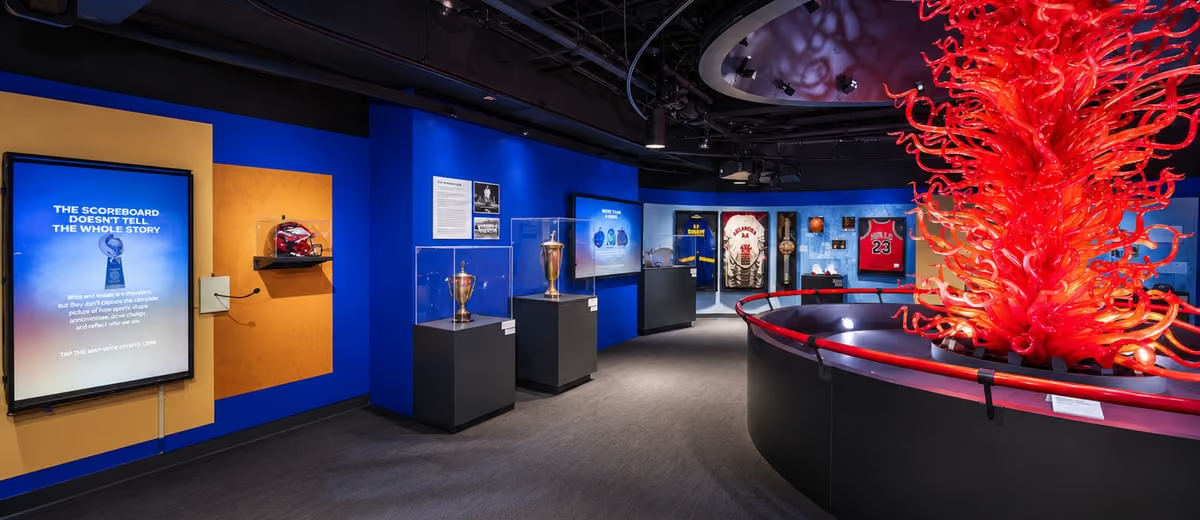
National Liberty Museum
Open since March 2026