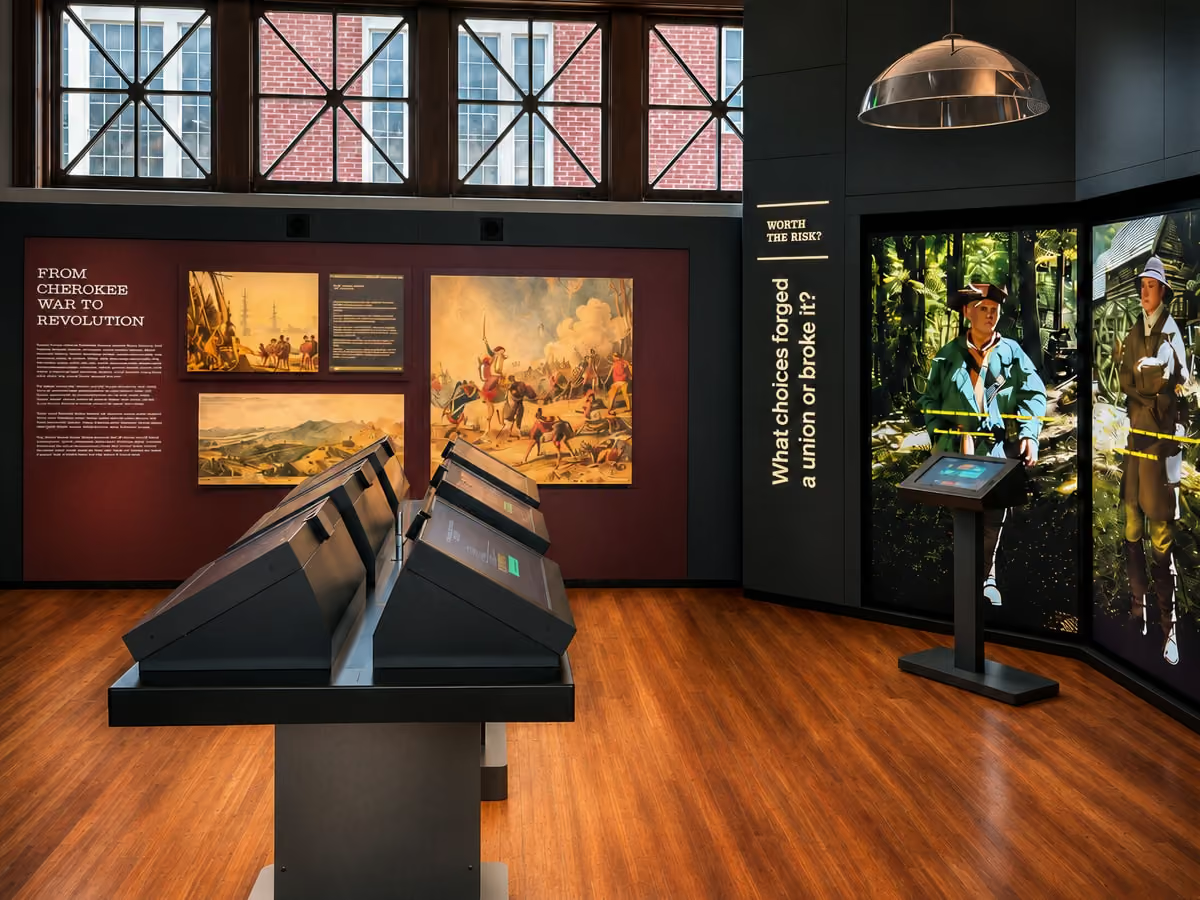
Opens January, 2027
Agriculture Center at Naper Settlement
What does it take to grow our food?
1 / 10
- Place
- Naperville, Illinois
- Client
- Naper Settlement, Naperville, Illinois
- What we did
- Planned ✓Designed ✓Built ✓Runs ✓
- Status
- Opens January, 2027
Built: TimeLooper delivered fabrication and installation, directly or through fabricators we managed.
The place and its story
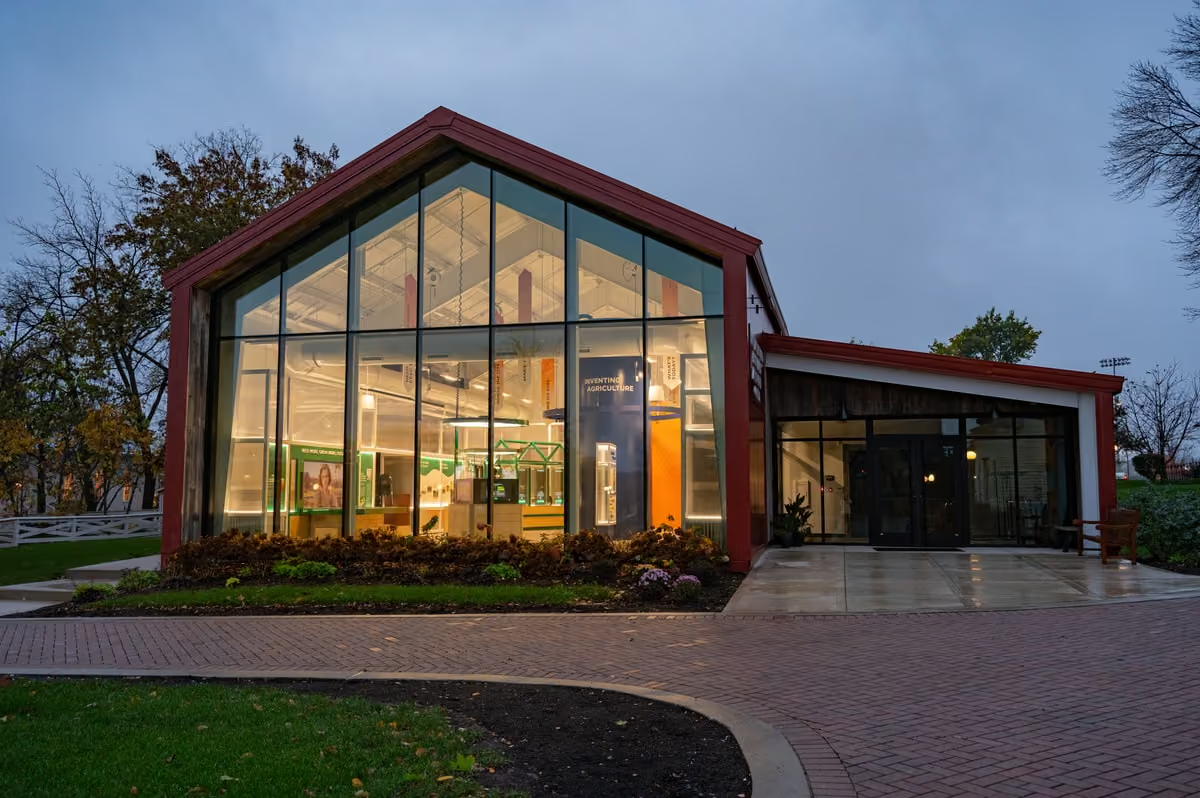
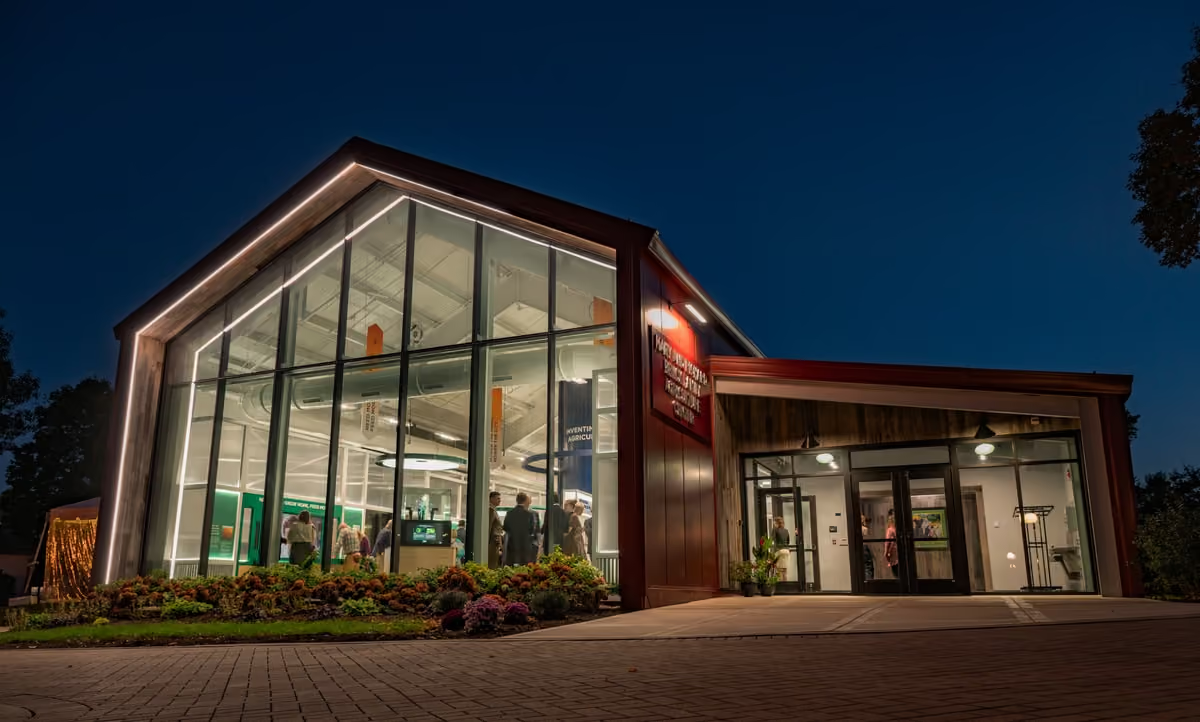
Naper Settlement is a history museum in Naperville, Illinois. Its new Agriculture Center tells how people learned to grow food, and how farming around Naperville changed as the town grew. The hall connects local history with choices about land, water, work and food.
The challenge
The hall is small, about 1,200 square feet, and the subject is large: soil, breeding, machines, power and moving food. Its core audiences are school groups and families. Every station had to work for a class rotating through and for a family wandering in, without a guide.
What we understood
Most visitors, and nearly all the schoolchildren, think agriculture means a farmer with a hoe. Almost everything else about it happens out of sight: the soil science, the breeding, the machines, the power, the moving of food across a region. The hall has to open that up, and it has to do it by letting people try things, because that is how anyone learns a system. If it works, a child leaves seeing agriculture as an industry that shapes how everyone lives, and as something they could do.
The idea
What does it take to grow our food?
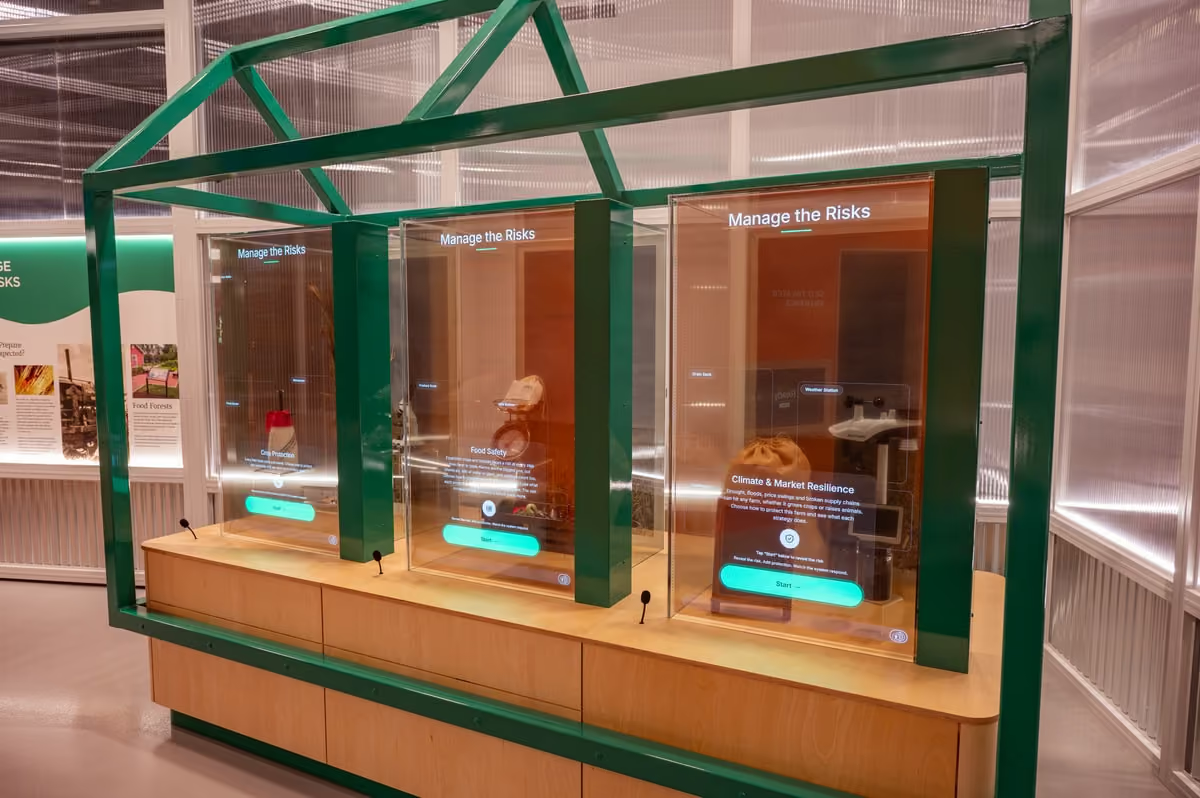
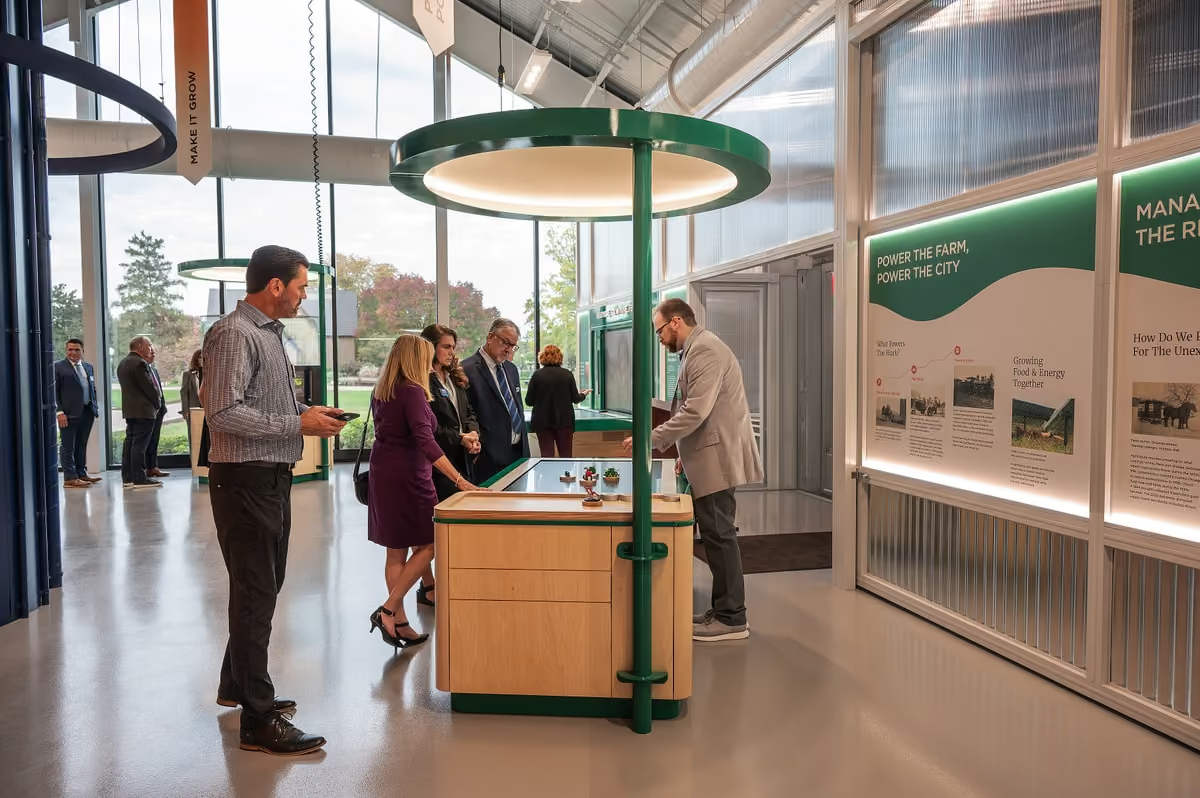
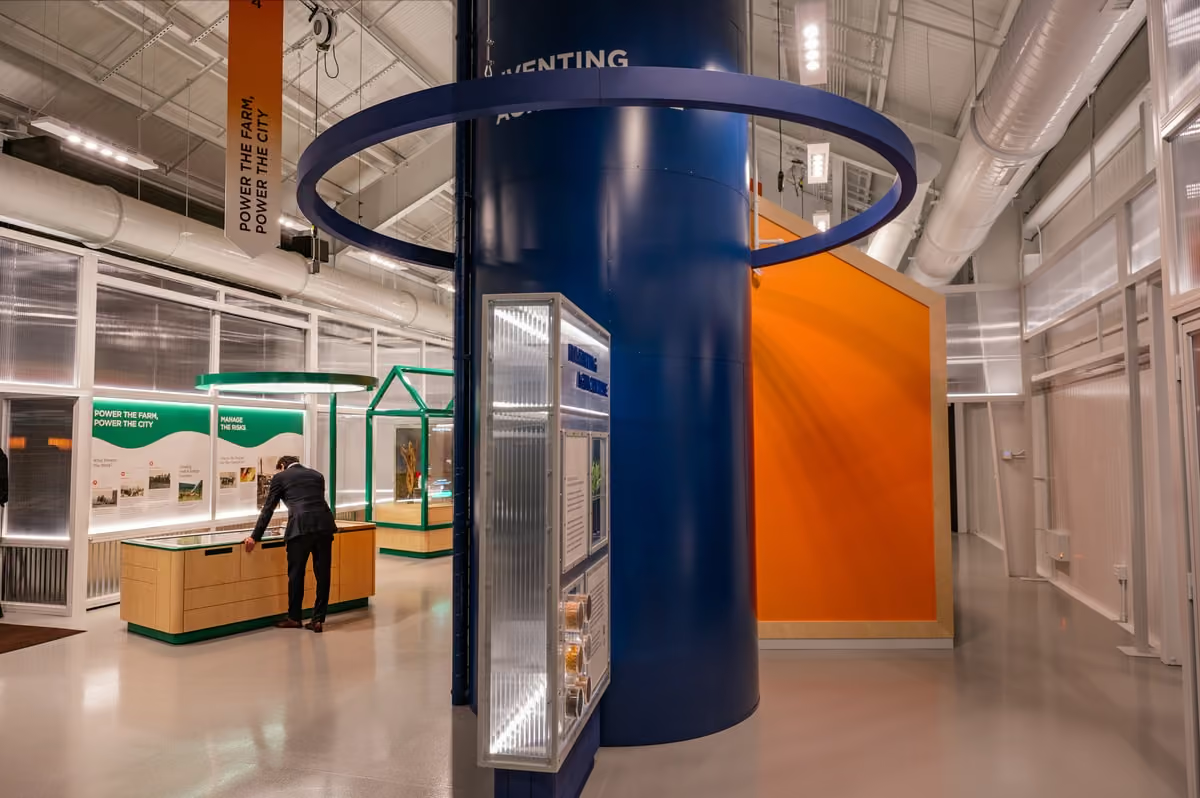
The hall is a set of stations where visitors run the experiments themselves. They decide what counts as agriculture, grow a plant above and below the soil, feed a growing town and power the farm. Each choice shows its benefits and its tradeoffs, because that is how food systems really change.
Inside the experience
Meet
A conversation across the table
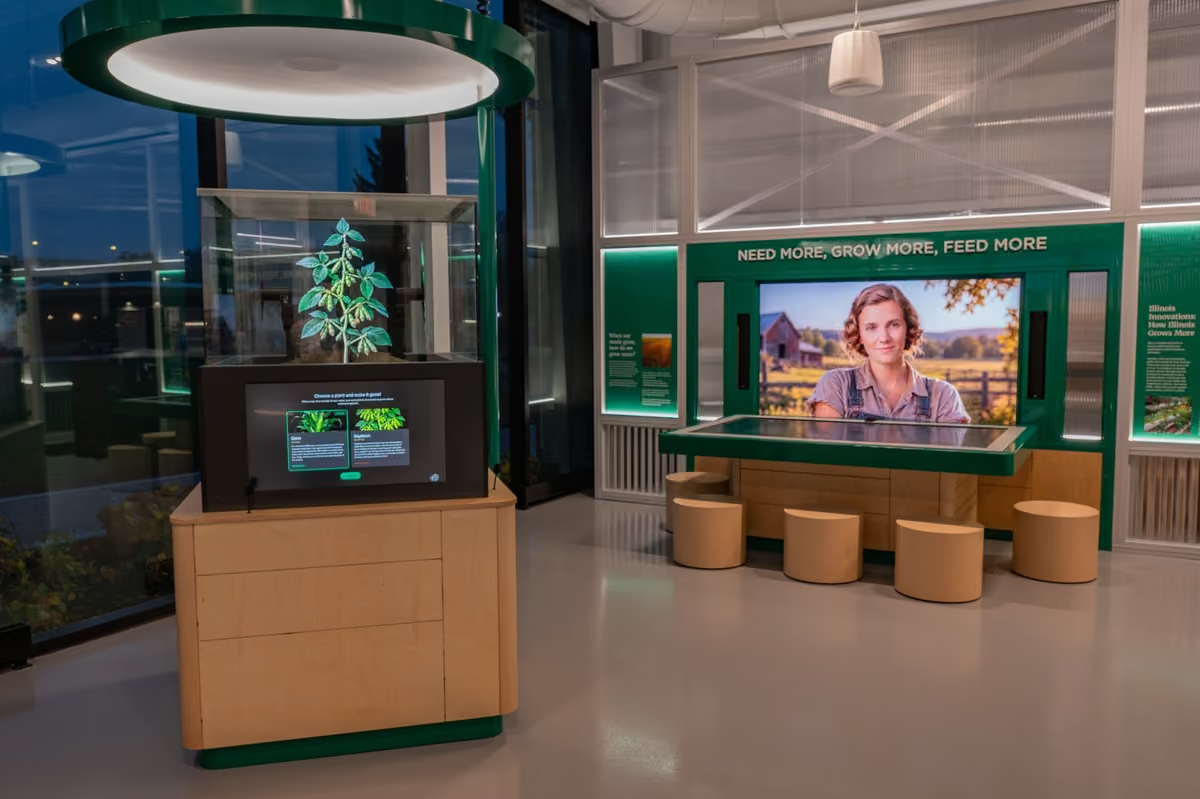
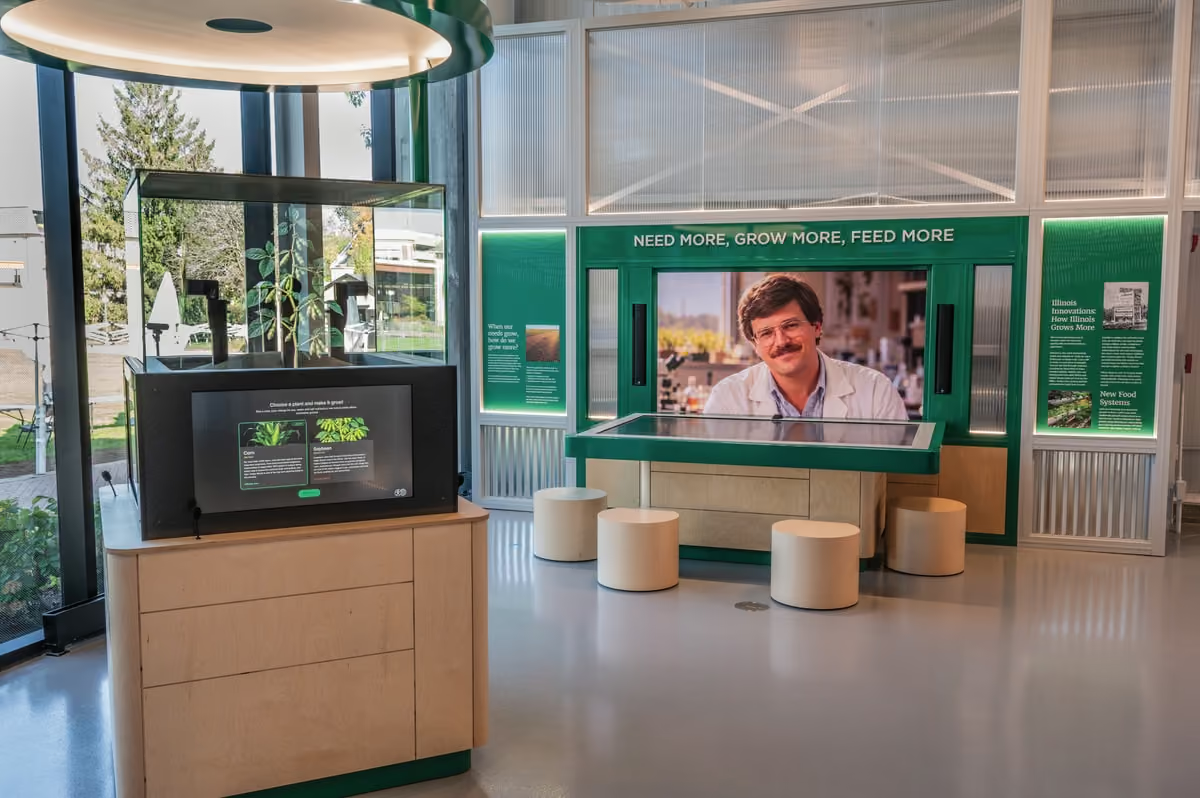
Visitors sit at a digital table that shows food production in and around Naperville. Across from them, a life-size guide changes between people from different periods as the story moves through time. Visitors make choices about growing more food and watch yields rise and pressure build across the system.
Activate
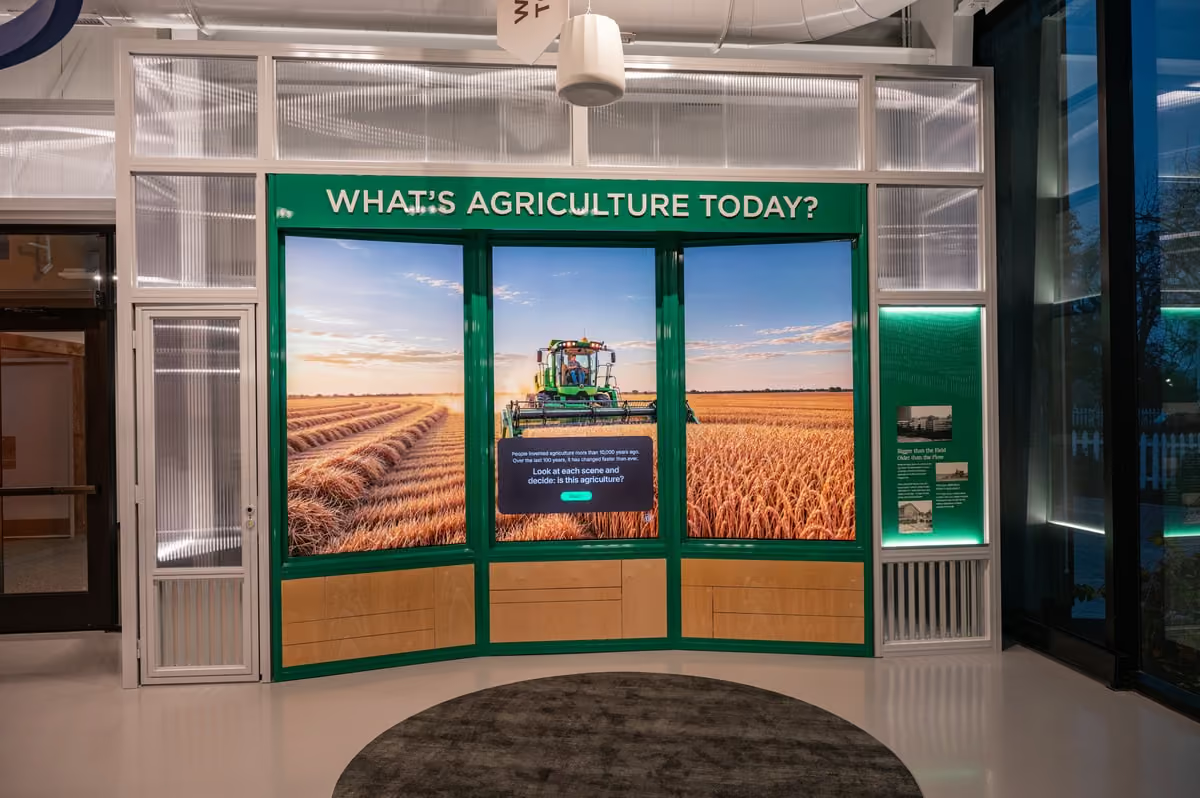
Is this agriculture?
The first station tests an assumption. A small group stands together before large screens and decides, as a group, whether each example counts as agriculture. The answers widen the idea from planting and harvesting to tools, storage, trade and planning. Everyone who eats turns out to be part of the story.
Make It Grow
A holographic plant grows out of real soil, as a real plant would, while a soil window shows roots spreading and water moving underground. Visitors change the growing conditions and watch both respond. As it grows, they can ask their own questions. Each side of the station runs its own plant, so several groups can explore at once.
Power the farm
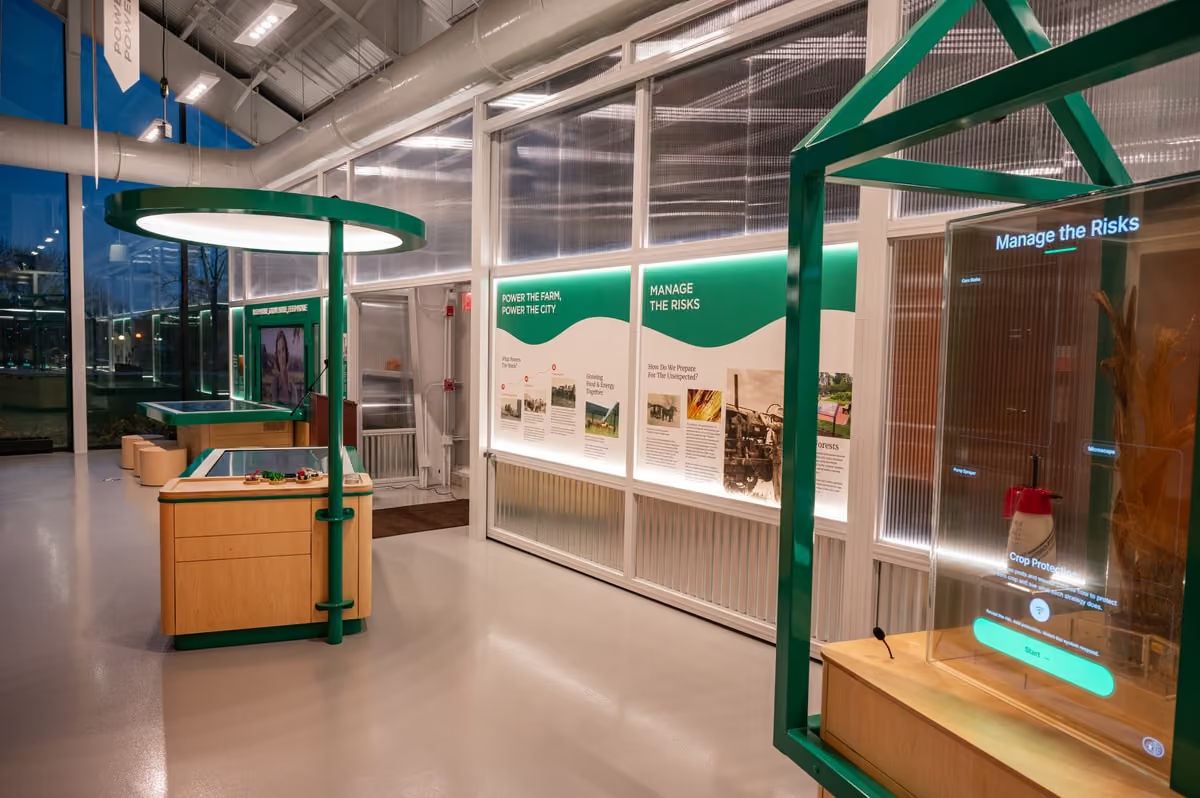
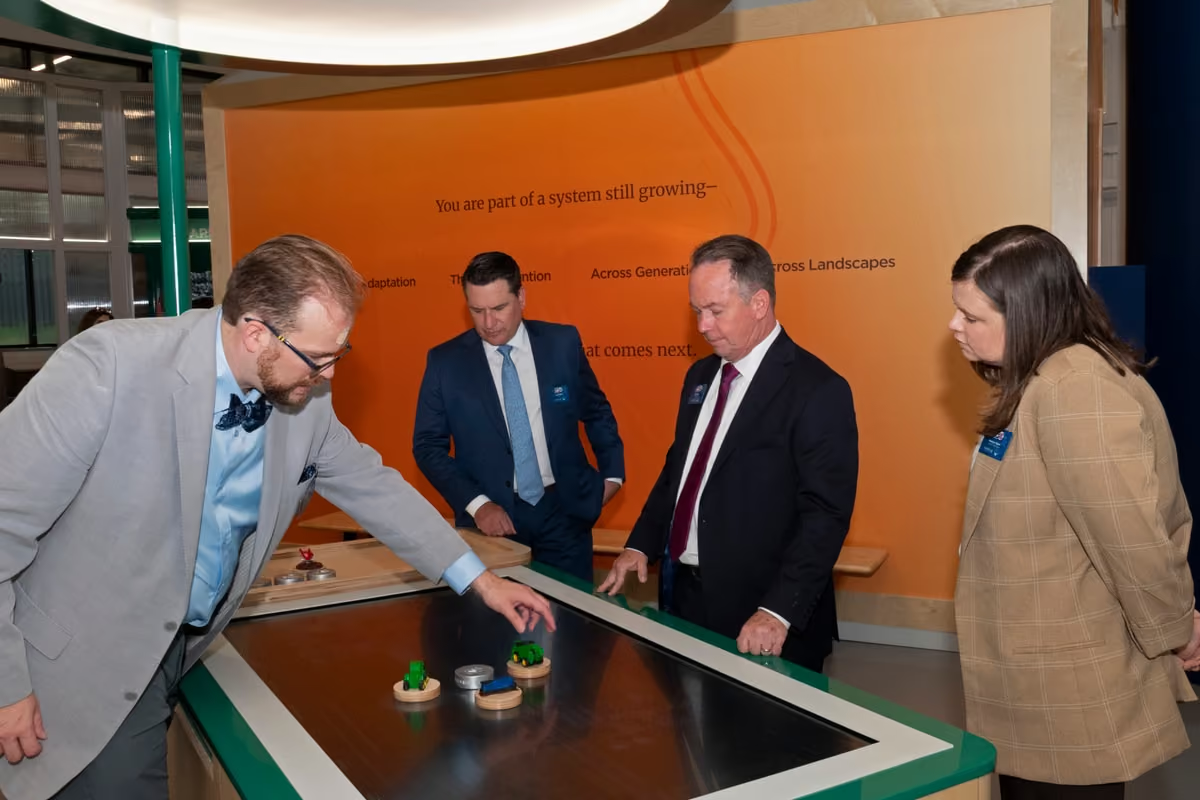
Around a large landscape table sit weighted tokens for new power and transport. Placing one on the table changes the land in front of everyone: bigger fields, faster harvests, food moving farther. The table also shows the cost, from fewer farm jobs to people living farther from where food grows.
More places like this
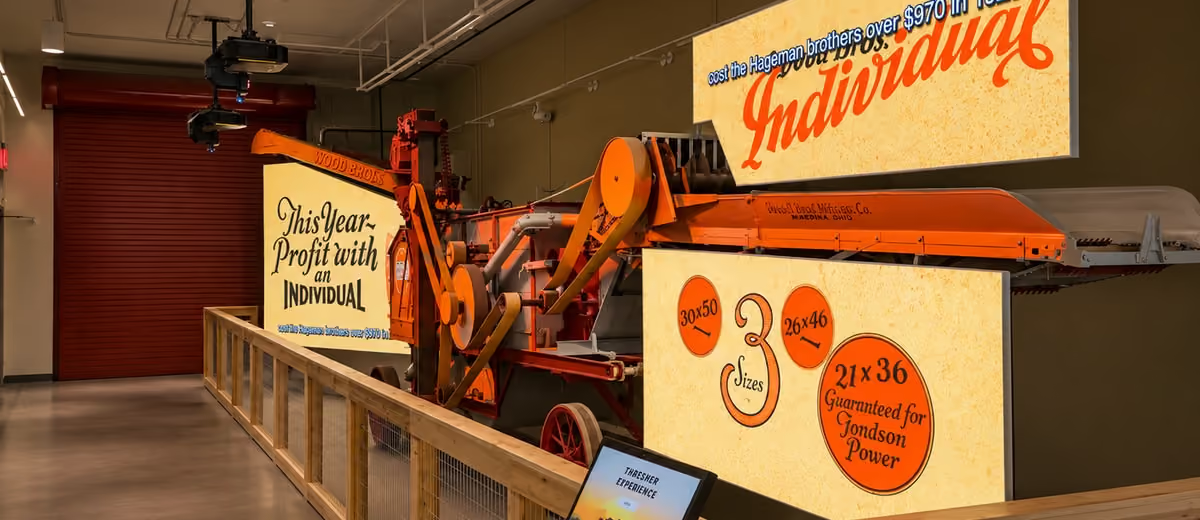
Thresher Hall, Naper Settlement
Open since December 2025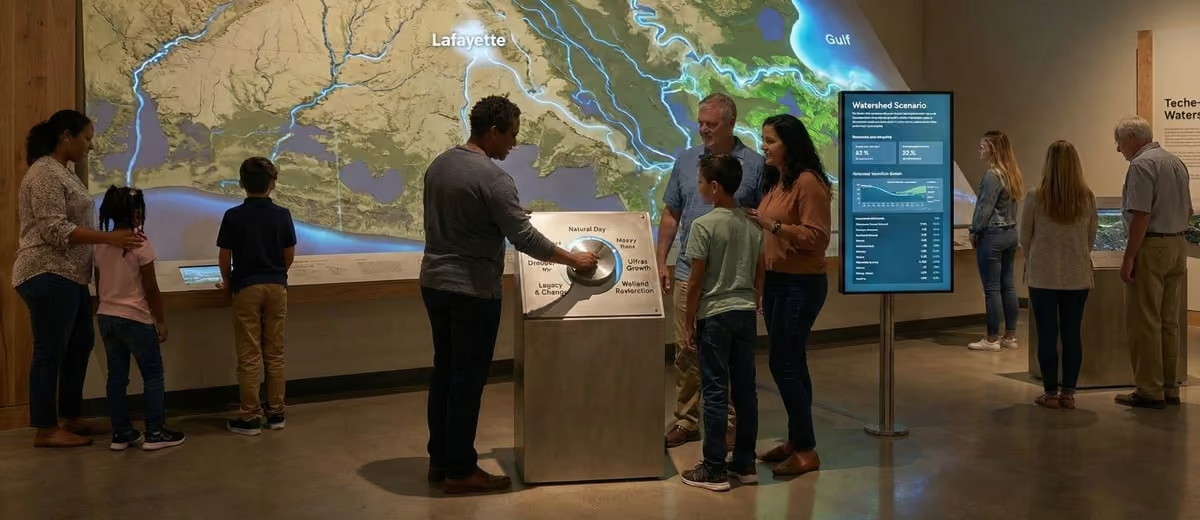
Vermilionville Living History Museum
Awaiting construction authorization